At a glance
- Wear thermal base layers under a fleece mid-layer. The heated lounge stays warm; the open deck is freezing. Peel layers as you move between them.
- Pack a waterproof, windproof jacket rated for Arctic conditions. The operator does not provide outerwear, so bring your own heavy-duty coat.
- Wear waterproof boots with grip soles. The land stop involves walking on a working fishing station; slip-resistant tread keeps you safe on wet surfaces.
- Touchscreen-compatible gloves let you use your camera and phone without removing them. Four hours on deck demands dexterity and warmth together.
- Arctic temperatures drain phone and camera batteries faster. Carry a portable charger and keep devices close to your body until you need them.
Layering for the heated cabin and open deck
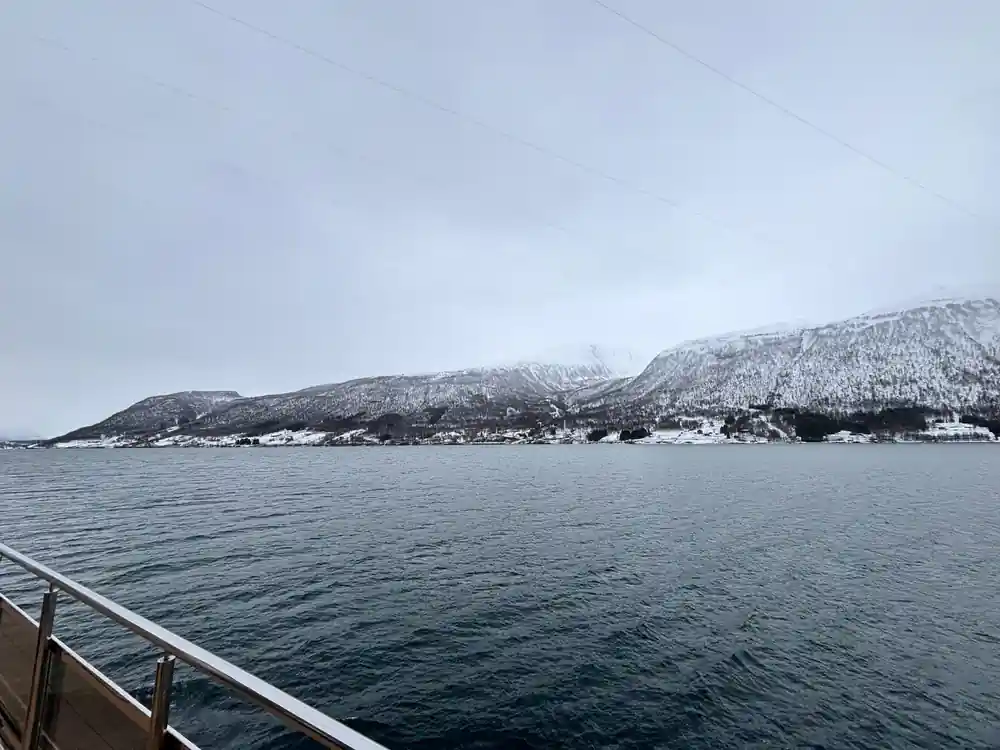
You'll spend four hours moving between two distinct environments: a heated interior lounge and an exposed upper deck where Arctic air dominates. The temperature difference can be 20°C or more, so layering is not optional. Start with a moisture-wicking base layer in merino wool or synthetic material, avoiding cotton entirely. This foundation pulls sweat away from your skin, which is critical when you transition from the warm cabin to the freezing outdoors and back again. A second mid-layer of fleece or wool provides insulation without bulk, trapping warm air close to your body even when damp.
Your outer shell must be a waterproof and windproof jacket rated for maritime conditions, not just rain. Wind chill accelerates heat loss dramatically on open water, and coastal spray means moisture comes from multiple directions. Choose a jacket with sealed seams and a high collar that protects your neck. Underneath, thermal leggings or wool trousers keep your legs insulated. The key to comfort across four hours is that you can remove or add layers as you move between spaces, so avoid anything too bulky to pack into a cabin seat beside you. Bring an extra fleece in your bag; many passengers wish they had a second mid-layer for the return journey when fatigue makes them feel colder.
Gloves that work with cameras and phones
Eagles and marine life moments pass quickly, and fumbling with gloves costs you the shot. Touchscreen-compatible gloves are not a luxury on this tour; they're essential. Look for versions with conductive thread on the thumb and first two fingers, which work with most smartphone cameras and modern mirrorless cameras. Wool gloves with conductive patches are warmer than thinner synthetic options but take longer to dry if they get wet. Many passengers bring two pairs: one thinner pair for active photography and a thicker insulated pair to wear while reviewing images or resting on deck.
Test your gloves with your specific device before boarding, as compatibility varies. Some touchscreen gloves have a learning curve; your fingers need to press slightly harder than bare skin. Consider fingerless mittens with a mitten flap that folds back, allowing you to expose your fingertips only when shooting. Bring hand warmers in your jacket pockets, not just for comfort but to thaw gloved fingers when sensation fades. After four hours, your hands may feel stiff even with gloves, so plan for a few minutes in the heated cabin to regain full dexterity before attempting detailed camera adjustments.
Protecting batteries and electronics in extreme cold
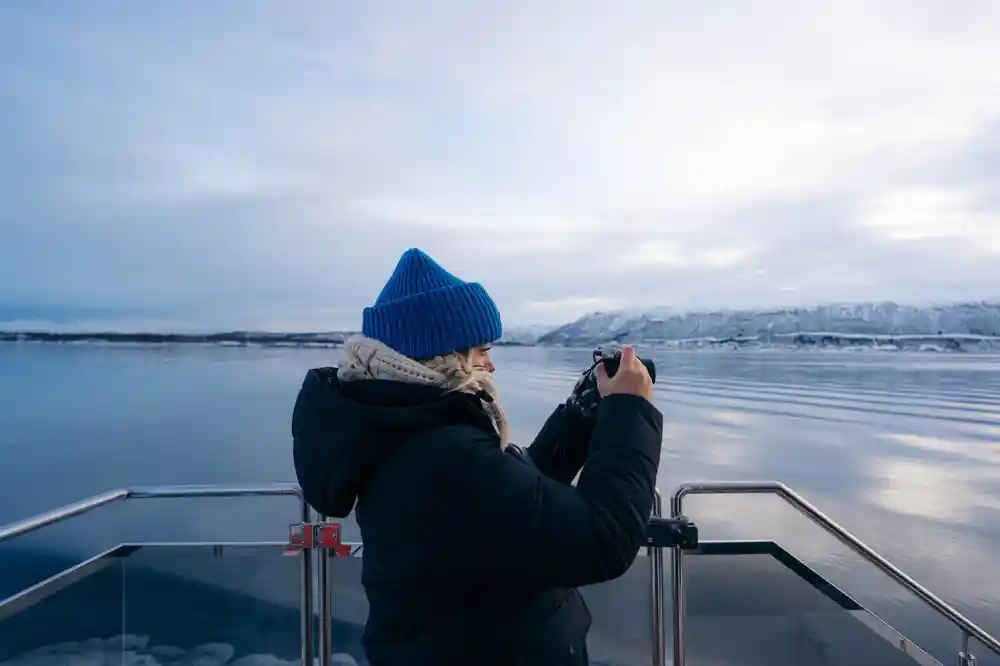
Camera batteries and phone batteries lose 30 to 50 percent of their charge in Arctic conditions, even if the device itself functions normally. This is not a failure; it is physics. Lithium batteries generate less electrical potential in extreme cold. Bring at least two fully charged batteries for your camera and carry a power bank for your phone rated for cold weather, kept in an inside jacket pocket against your body heat. Do not leave electronics exposed on the open deck longer than necessary. The moment you finish shooting a sequence, return the camera to your bag where it stays warmer and protected from salt spray.
Condensation is a second threat. When you bring a cold camera into the heated cabin, moisture forms instantly on the lens and sensor. Prevent this by placing your camera in a sealed bag before entering the warm interior, then leaving it closed for 15 to 20 minutes while it reaches cabin temperature. Only then open the bag and wipe down the exterior. Keep a microfiber cloth and lens pen in your jacket, not your bag, so you can make quick adjustments without creating temperature shock. Phone screens also become sluggish in cold; keep yours in an inside pocket and retrieve it only when you need to capture something or check the time.
Footwear for the fish racks and deck
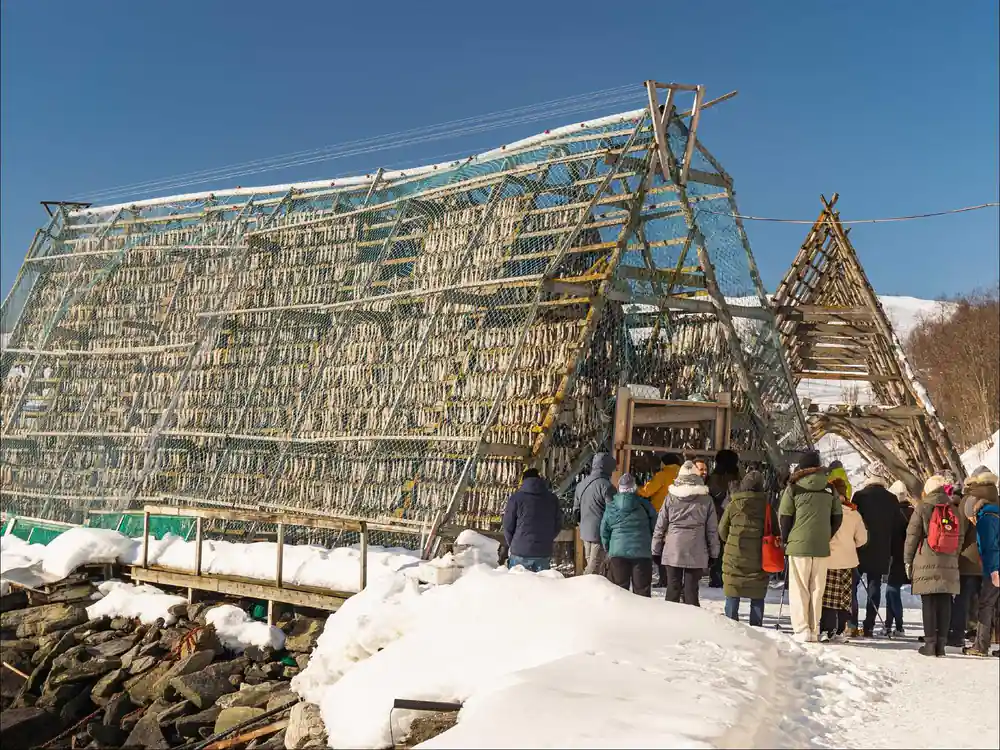
The land stop at the fish racks involves walking on uneven surfaces, often wet and potentially slippery. Waterproof hiking boots with genuine grip soles are far better than standard winter boots or sneakers. Look for boots insulated to minus 15°C and with a sole pattern designed for wet rock and sloped terrain. Neoprene or wool socks work better than cotton; two pairs of socks is common practice on Arctic tours. Gaiters that cover the gap between your boot and trouser leg prevent snow or water from trickling down into your socks, a small detail that becomes significant during a four-hour tour.
Your feet will be coldest during the return journey when you are tired and moving less. Bring hand warmers for your pockets, but also consider small heat patches designed to stick inside your boot at the sole. Many cruise operators have non-slip deck plates, but they become icy in certain conditions. Break in your boots before the tour; blisters develop faster in cold, and the cabin is too small to recover comfortably. Do not wear new boots on tour day. Deck footwear must be sturdy enough to handle catamaran movement without rolling your ankle, so leave lightweight shoes at your accommodation.
15°
The open deck drops to minus 15°C with wind chill, making layering your non-negotiable defence.
Binoculars for spotting wildlife
Eagles soar at distances where the naked eye sees only specks, and marine mammals surface briefly before diving. You will see more wildlife if you have binoculars, but they are not mandatory. The local professional guides aboard possess extensive knowledge of where animals appear and can direct your attention to specific locations. If you choose to bring binoculars, compact models rated 8x42 or 10x42 are ideal for a moving boat; larger lenses reduce stability and create motion sickness in some users. Waterproof binoculars prevent internal fogging when moving between temperature zones.
Binoculars with individual eye focus adjust faster than center-focus models when you spot something unexpected. Keep them in a padded neck harness so your hands stay free for balance on the moving deck. Anti-slip rubber coating prevents drops when your gloved hands are cold and less sensitive. Budget binoculars fog easily in Arctic conditions; if you own quality optics, this is the tour to bring them. If you do not have binoculars, the deck space allows you to position yourself near the guide, who points out sightings, or to use your camera's zoom function and review images on the screen afterwards.
Seasickness prevention on a catamaran
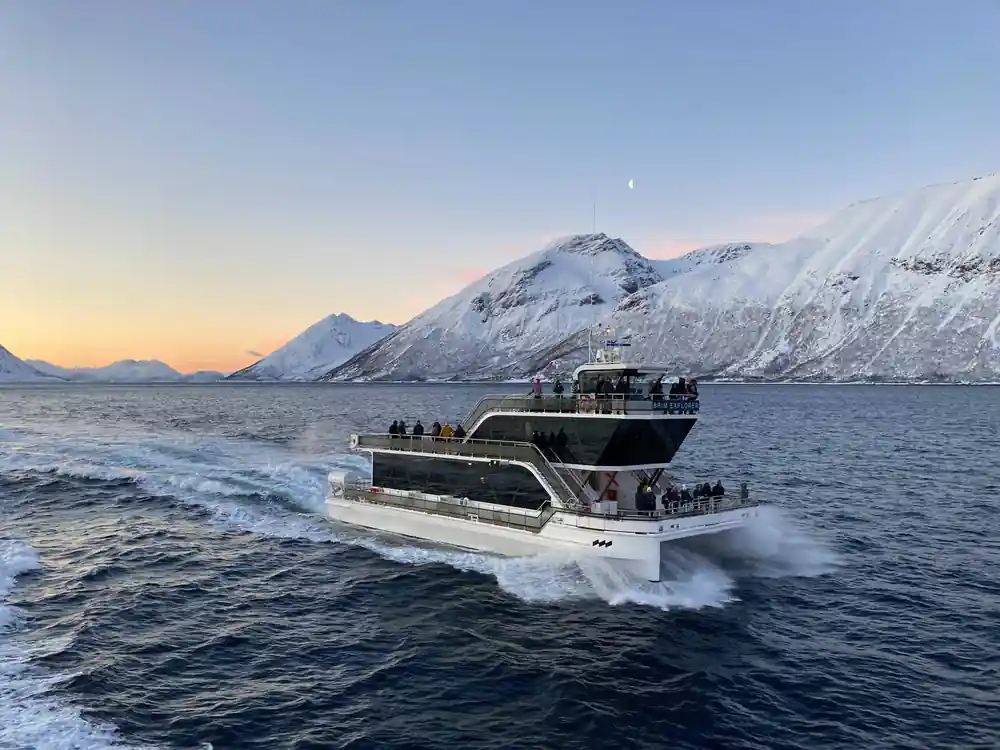
Catamarans sit wider and lower than traditional mono-hull vessels, giving them better stability in fjord waters. However, a four-hour cruise in Arctic conditions is still maritime motion, and some passengers feel queasiness. Motion sickness patches applied behind the ear several hours before boarding are effective for most people. Sea-Bands, which use acupressure on the wrist, are non-pharmaceutical and work for light to moderate sensitivity. Ginger supplements or ginger tea consumed before boarding help some passengers. Avoid alcohol and heavy meals the night before and the morning of the tour.
During the cruise, sit or stand amidships, toward the middle of the vessel where motion is least pronounced. Stay on the open deck during rough water; your inner ear adjusts better when you can see the horizon. Eating light snacks and staying hydrated reduces symptoms. The heated cabin is comfortable, but remaining indoors without a view of stable reference points actually worsens nausea. If you feel uneasy, inform a crew member. They are experienced with seasickness and can recommend the best position on the boat or suggest sitting in the cabin's viewing areas that face windows. Medication side effects vary; test any new medication before tour day rather than discovering drowsiness or dry mouth during the cruise.
Head-to-toe packing checklist for four hours
Base layer: merino wool or synthetic thermal underwear, long-sleeved top and full-length bottoms. Mid-layer: fleece or wool sweater and thermal leggings. Outer shell: waterproof, windproof jacket with sealed seams and a wool or fleece hat that covers your ears. Neck: neck warmer or balaclava to protect the most exposed area. Gloves: two pairs, at least one touchscreen-compatible. Socks: two pairs of wool or neoprene, not cotton. Boots: waterproof, insulated, grip-soled hiking boots with gaiters. Extras: hand warmers, small heat patches for boots, tissues, and lip balm with SPF.
For photography and electronics: your camera and two batteries; power bank kept in your jacket; microfiber cloth and lens pen. Phone in an inside pocket. Optional: binoculars with waterproof coating and padded neck harness; seasickness medication or patches applied three hours before departure. In your bag: an extra mid-layer fleece; waterproof bag for your camera; sealed bag for electronics transitioning between temperature zones. Sunscreen and sunglasses are often overlooked but essential; Arctic light reflects off water and snow, intensifying UV exposure even on cloudy days. Pack a waterproof bag for wet items so you do not soak your cabin seat on the return journey. Aim for simplicity; you will be less comfortable if you are weighed down by excessive gear.
Ready to explore. Book your Arctic sailing.
from US$157Reserve now & pay later