At a glance
- Between 1914 and 1937 Norwegian papers reported at least six vessels aground, sunk or capsized in Rystraumen, including a cargo steamer whose wreck had to be blown up because it blocked the fairway.
- In November 1928 the motor smack Ratafjeld collided with the state inspection ship Michael Sars in Rystraumen. She sank twenty minutes later and two of her crew were lost.
- A traveller writing in 1929 called Rystraumen særs strid, exceptionally fierce. The tidal current here runs to five or six knots.
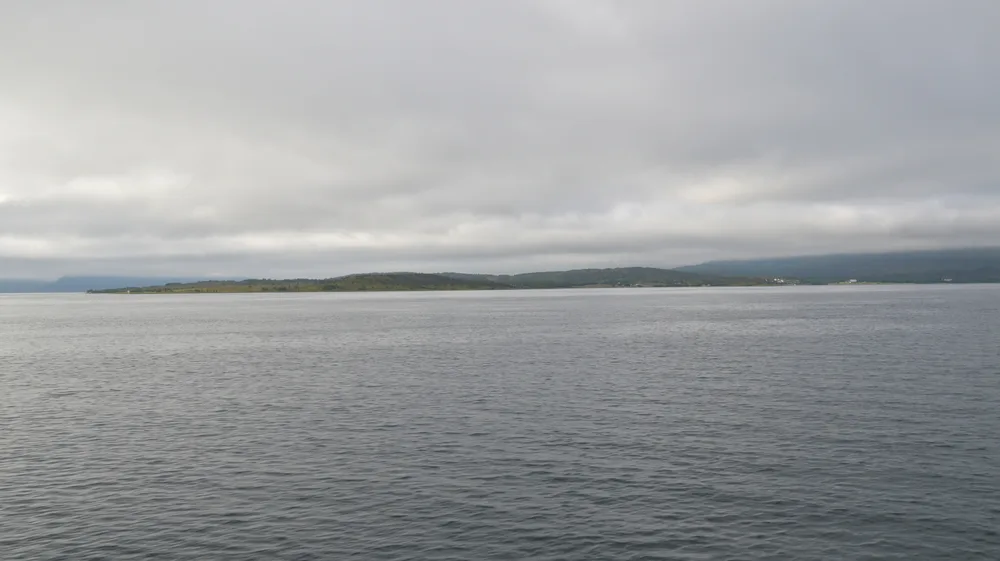
- A small island lies in the strait whose western point is called Stagelnes. A 1921 account says tradition tells of what happened on that headland facing the sea.
The quiet part of the cruise was not always quiet
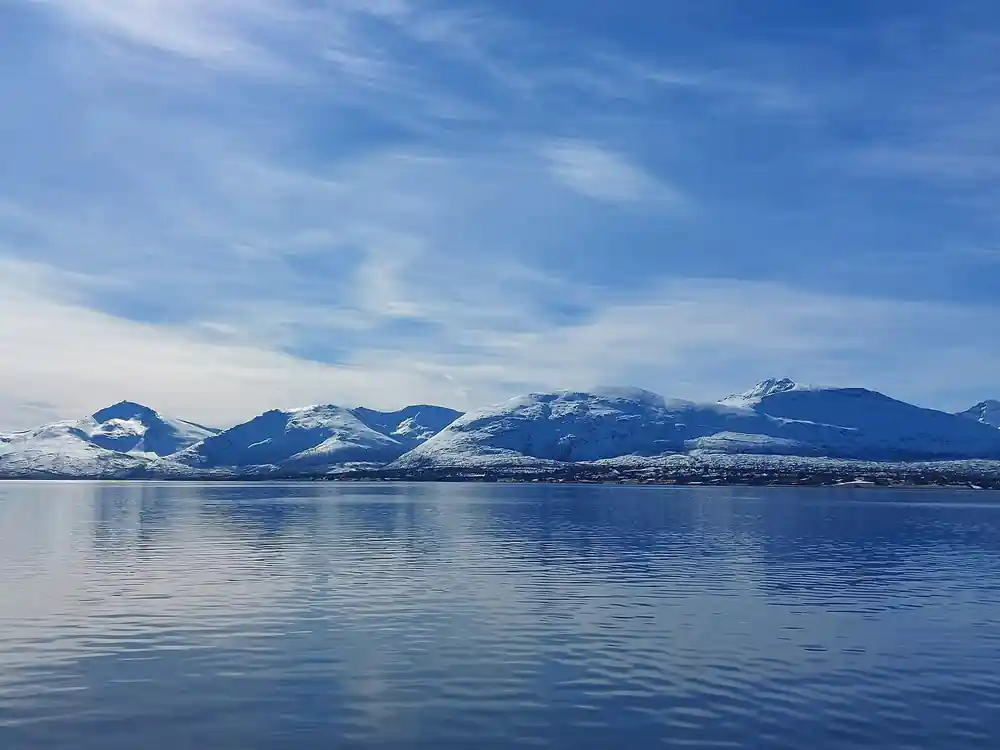
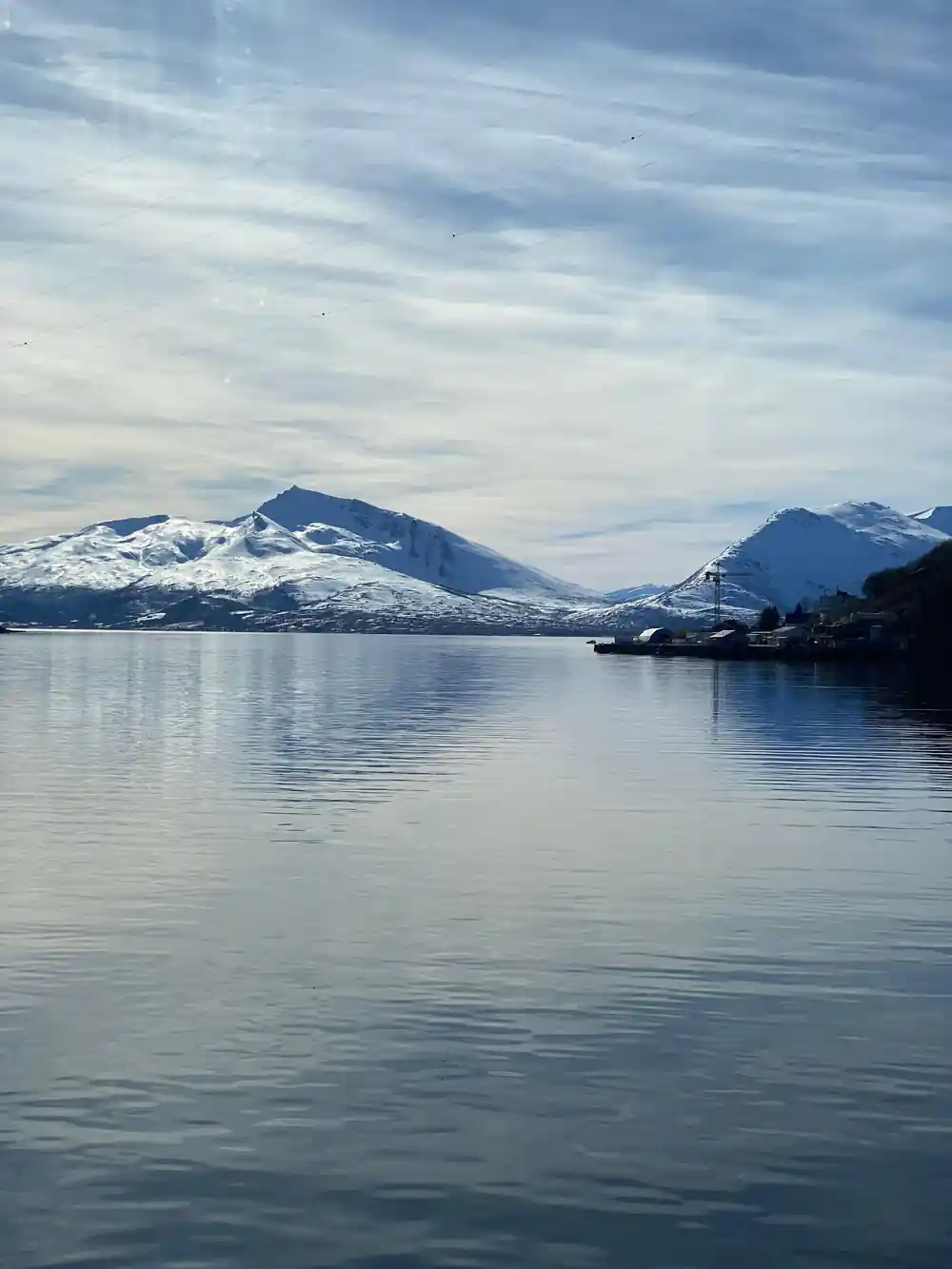
There is a stretch of this cruise where the boat passes between Kvaløya and the mainland through a narrowing of the water. It looks like nothing much. It is called Rystraumen, and it is a tidal strait: the whole of Balsfjorden and Ramfjorden empties and fills through it twice a day, and the current runs to five or six knots.
A traveller writing in 1929 put it more directly. Rystraumen south of Tromsø, he wrote, was særs strid [2], exceptionally fierce, and he was describing it in passing, as a thing everyone knew.
The newspaper record between 1914 and 1939 is largely a list of vessels that misjudged it. None of this is on a sign at the quay, and all of it happened in the water you will be sitting on.
Rystraumen shipwrecks, in the order the papers reported them
The earliest in this set is from November 1914, when the Haalogaland reported that a fishing smack had sunk in Rystraumen and her crew had been taken aboard a trawler and carried in to Tromsø [3]. Short, and with no fuss about it.
In October 1921 the Nordlands Folkeblad described the coastal steamer Polarlys running up on a clay beach just north of Rystraumen in thick fog. It happened at low water, and when the tide rose she came off again [4].
September 1928 was worse. The cargo boat Flint of Bergen, inbound from Kirkenes loaded with pyrite, ran aground at midday on a Saturday in Rystraumen just south of Tromsø [5]. She did not come off. Within days the papers were reporting that the wreck of the sunken steamer had to be blown up because it was obstructing traffic, and that her masts were still visible above the water [6].
The night two men were lost
The worst of it came in November 1928, and because two independent papers carried it, it can be stated as fact rather than quoted.
The motor smack Ratafjeld of Meløy collided with the state inspection ship Michael Sars in Rystraumen, south of Tromsøya. The smack sank, and two of her crew were lost [7]. Another report notes she went down twenty minutes after the collision, which is enough time to know what is happening and not always enough to do anything about it.
It went to law. In November 1931, three years later, the Halden Arbeiderblad reported that the city court in Oslo had given judgment on the Saturday in the case of the Rystraumen collision near Tromsø [8]. A strait a few hundred metres wide, argued over in a courtroom a thousand kilometres away.
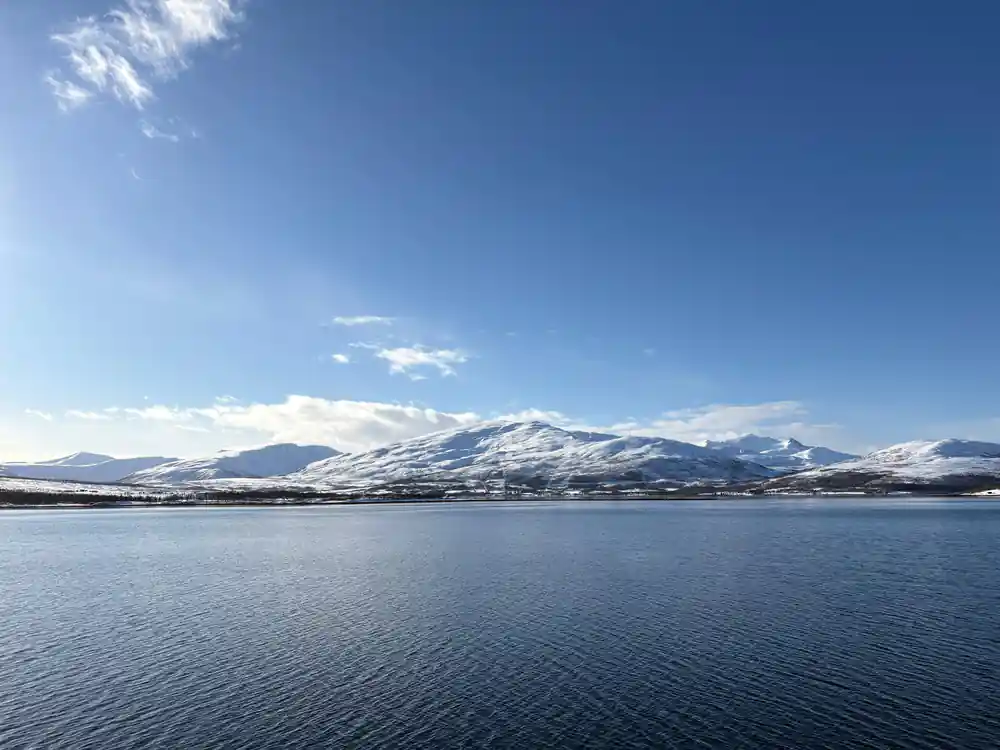
The tidal strait a traveller in 1929 called særs strid, exceptionally fierce, and where between 1914 and 1937 the papers recorded at least six vessels aground, sunk or capsized.
Two ways to lose a ship in a tidal current
The archive is unusually clear about mechanism, and there are two.
The first is the current itself. In July 1932 the Lofotposten reported the timber ship Gråfjeld of Bergen passing Tromsø on a Thursday, homeward from Archangel with a cargo of timber. In Rystraumen the ship came athwart the current and drove toward the mountain, and Captain Paulsen, who was on the bridge, jumped down onto the deck [9]. A vessel that loses steerage in a five-knot stream does not stop; it goes where the water goes.
The second is a moment's inattention, and the most human line in the whole set records it. In July 1936 the Namdalen reported that the Bogna of Bangsund had gone aground in Rystraumen the previous year, and gave the cause: the helmsman had leaned over against the railing [10].
It kept happening. In July 1937 two papers reported a fishing vessel going down in Rystraumen: the Nordlands Avis named her Svanen and said she capsized and sank [12], and the Hardanger Bygdeblad added that one man went to the bottom with her [11].
Stagelnes, and the people who crossed on purpose
Not everything in the record is a wreck. In October 1921 the Nordlands Folkeblad, describing the district, noted that a small island lies in Rystraumen whose western point bears the name Stagelnes, and that tradition tells of what happened on that headland facing the sea [1].
The same paper described people crossing the strait deliberately and well. The Sami went over Rystraumen from Kvaløya when the current was slack, then inward over Malangen and on across the border, home to Sweden [1]. Slack water is a window of minutes here, and knowing it was the difference between a crossing and an incident.
In September 1930 the Nordlands Avis carried a smaller sighting: a man rowing in Rystraumen looked up and saw a fox swimming across from Hella toward Ryøya [13]. Whatever the strait did to shipping, the wildlife had its measure.
What to watch for as you go through
The strait still behaves the same way. It is charted, your vessel is powered and stabilised, and the crossing is routine, which is exactly why it is worth knowing what it used to be.
Watch the surface. In a tidal current running against wind you will see standing waves, boils and lines of disturbed water that have nothing to do with the weather. That is the same water that took the Flint, and the same slack-water window the Sami waited for.
There is one more oddity in the record, and it belongs here. A 1928 drift-bottle study found bottles the whole length of Balsfjorden and Ramfjorden, but noted that remarkably none was ever found outside Rystraumen or north of Tromsøya [14]. Whatever goes into the fjord behind the strait tends to stay there. You are sailing across the mouth of a bottle.
Twenty-five years in one tidal strait
1914: a smack sinks
Haalogaland reports a fishing smack sunk in Rystraumen, her crew rescued aboard a trawler and carried in to Tromsø. [3]
1921: the Polarlys aground
In thick fog the coastal steamer runs up on a clay beach just north of Rystraumen at low water, and floats off when the tide rises. [4]
1928: the Flint, from Kirkenes
The cargo boat Flint of Bergen, loaded with pyrite, runs aground at midday on a Saturday just south of Tromsø. [5]
1928: the wreck is blown up
The Flint's wreck obstructs traffic and must be destroyed; her masts are still visible above water, and four anchors have been salvaged. [6]
1928: two men lost
The motor smack Ratafjeld collides with the state inspection ship Michael Sars, sinks twenty minutes later, and two of her crew are lost. [7]
1931: judgment in Oslo
Three years on, the city court in Oslo rules in the case of the Rystraumen collision. [8]
1932: the Gråfjeld goes athwart
Homeward from Archangel with timber, the ship comes across the current and drives toward the mountain; the captain jumps from the bridge to the deck. [9]
1936: a hand on the railing
The Bogna of Bangsund goes aground because the helmsman leaned over against the railing. [10]
1937: the Svanen capsizes
A fishing vessel capsizes and sinks in Rystraumen, and one man goes to the bottom with her. [12]
Sail the strait that took them
from US$157Reserve now & pay later