At a glance
- Low Arctic sun demands ISO 400-800 and wider apertures. Shutter speed 1/125s minimum to freeze wildlife motion from a moving catamaran deck.
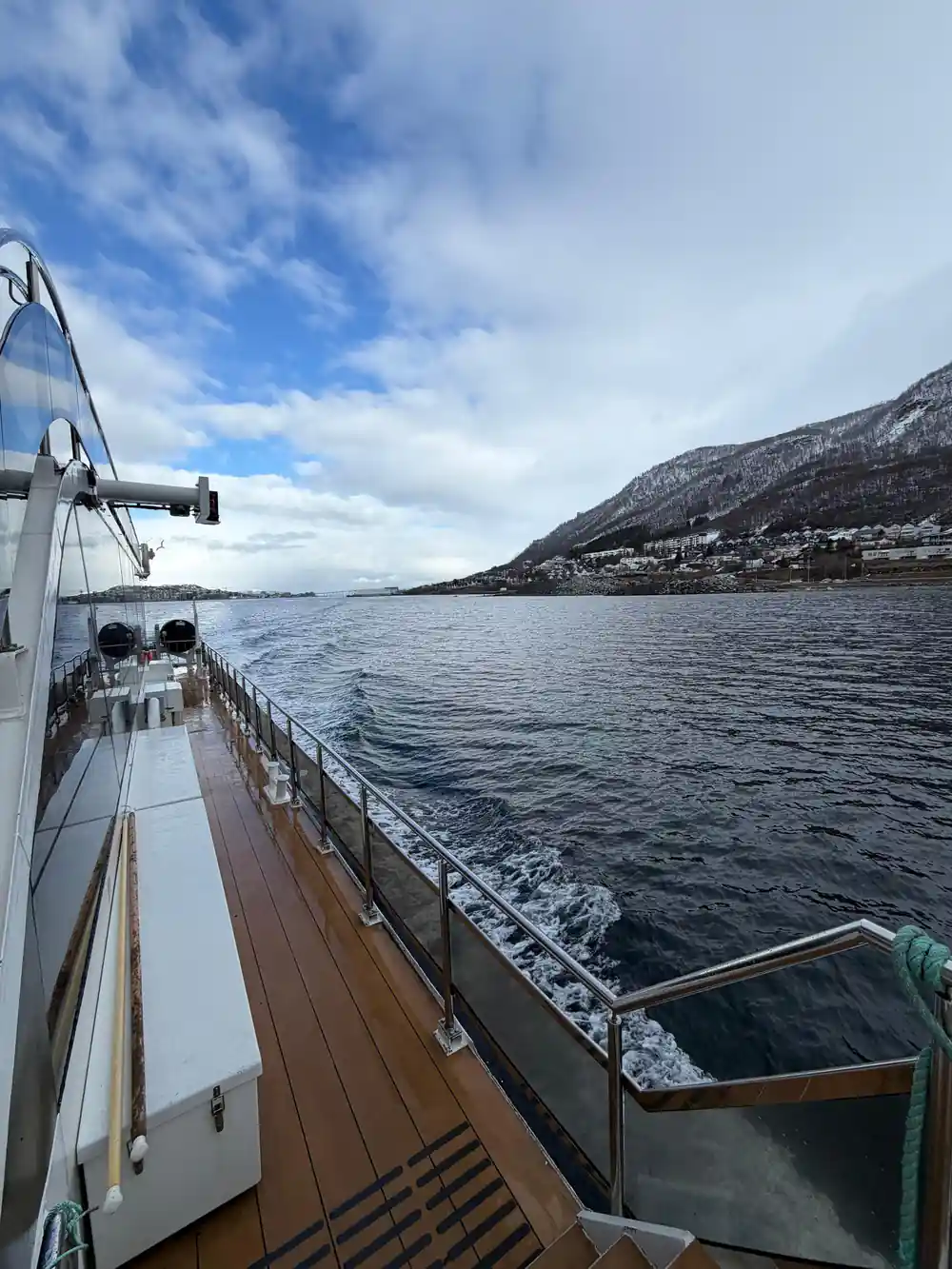
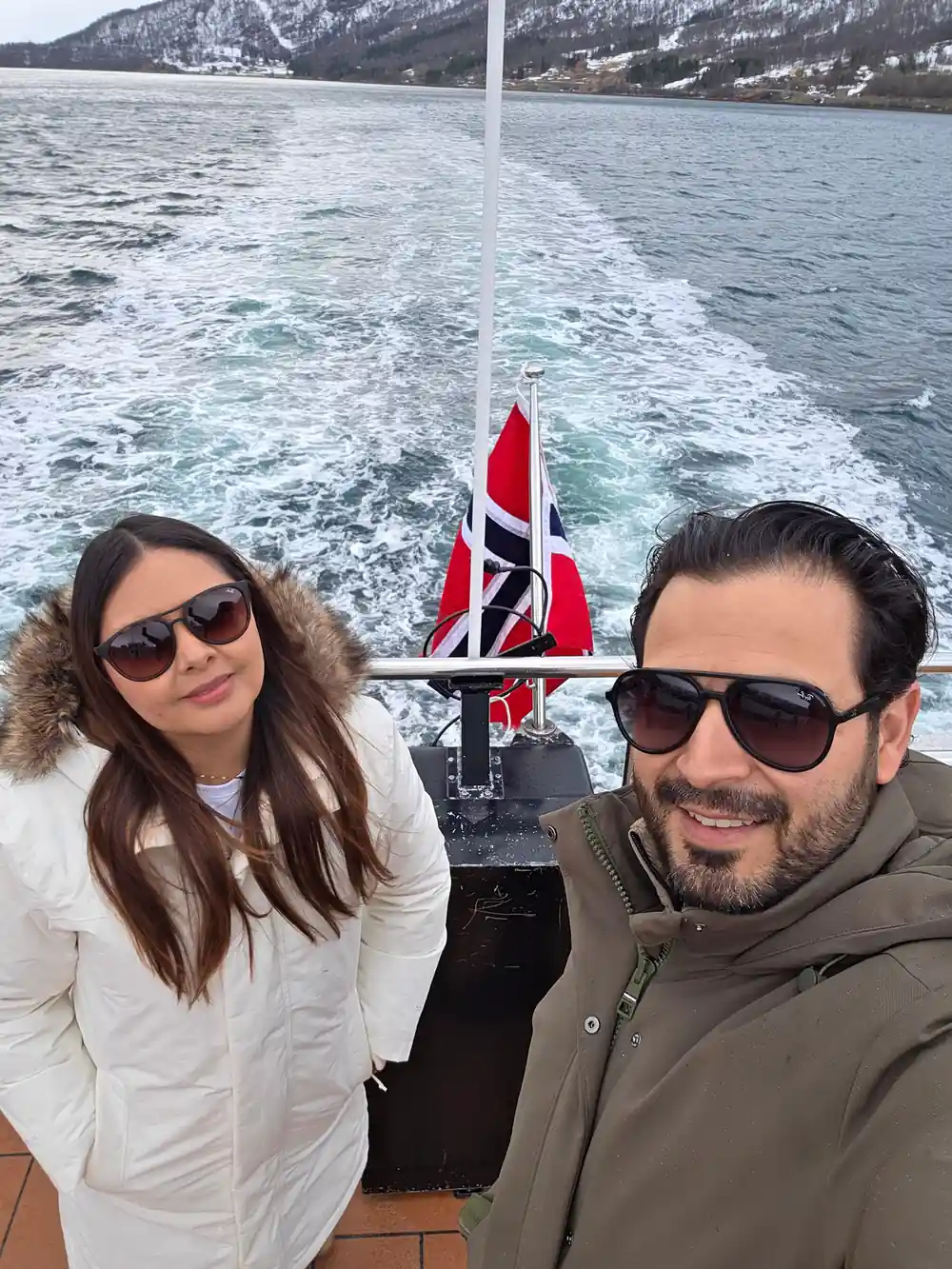
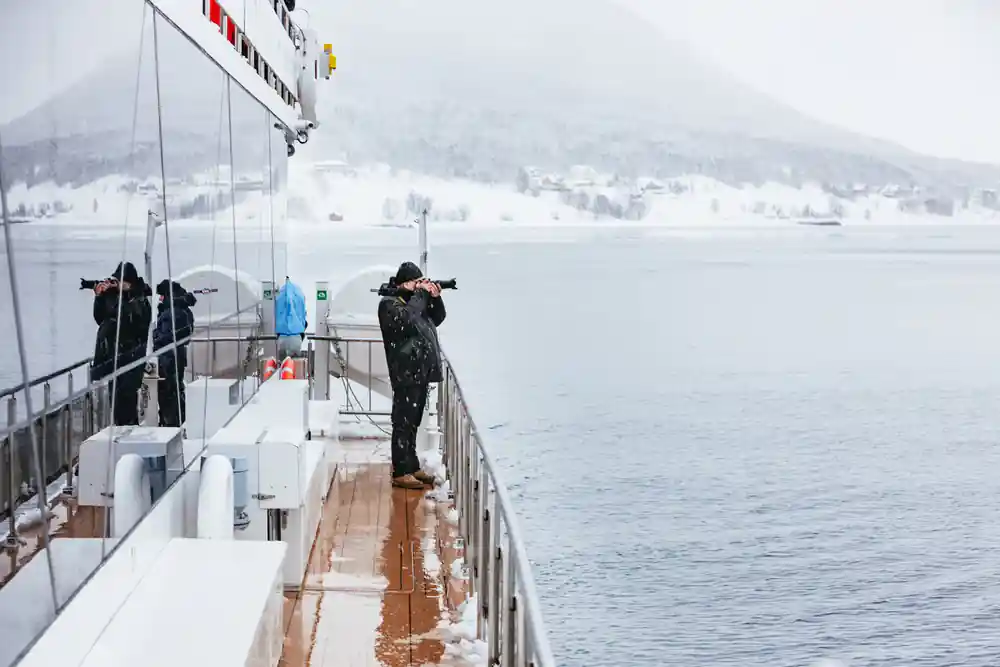
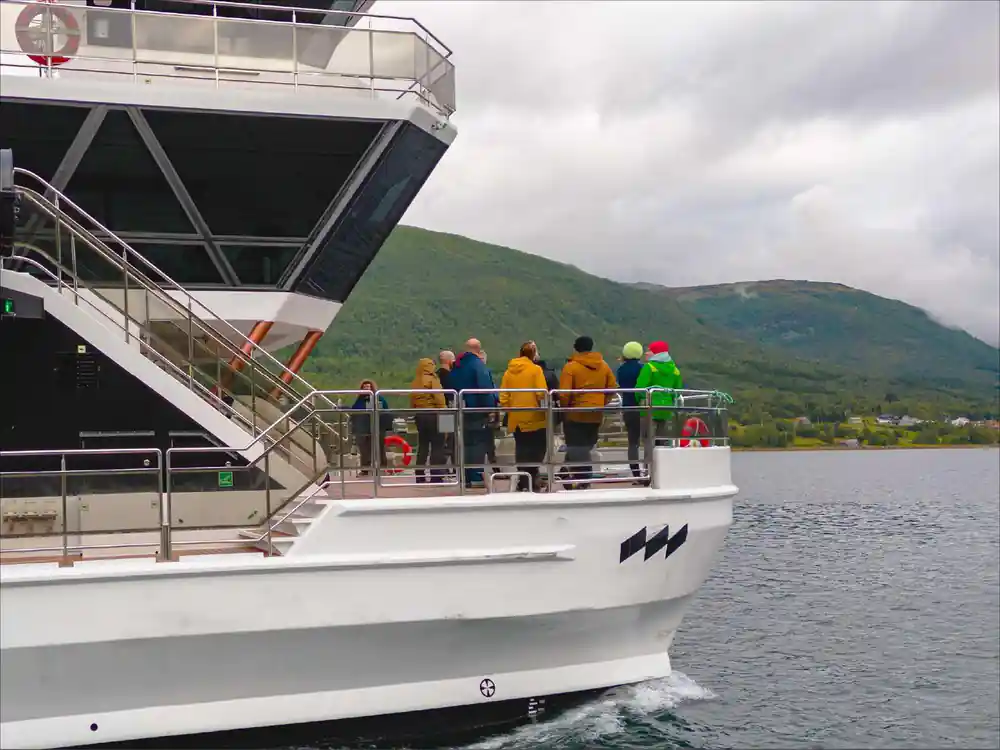
- Port and starboard railings offer clearest sight lines. Bow area captures approaching fjord landscapes; stern works for eagle tracking as they recede into distance.
- Keep a microfiber cloth sealed in a warm pocket. Wipe glass every 5-10 minutes. Avoid sudden temperature shifts when moving between open deck and enclosed cabin.
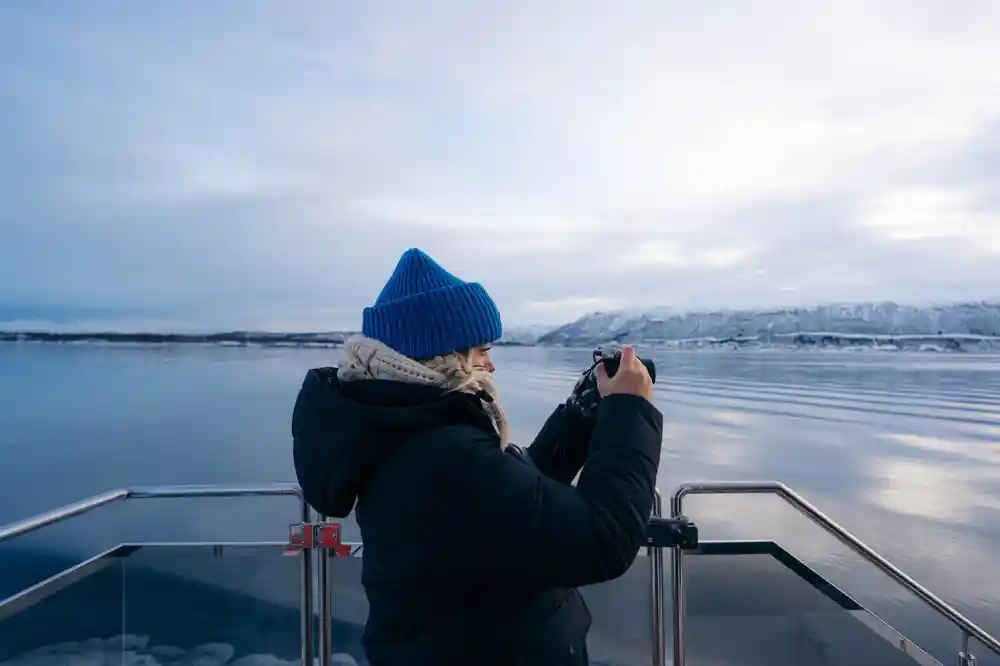
- Telephoto lenses (200-400mm) frame distant eagles clearly. Brace against the railings to steady shots; catamaran movement requires stable technique over tripods.
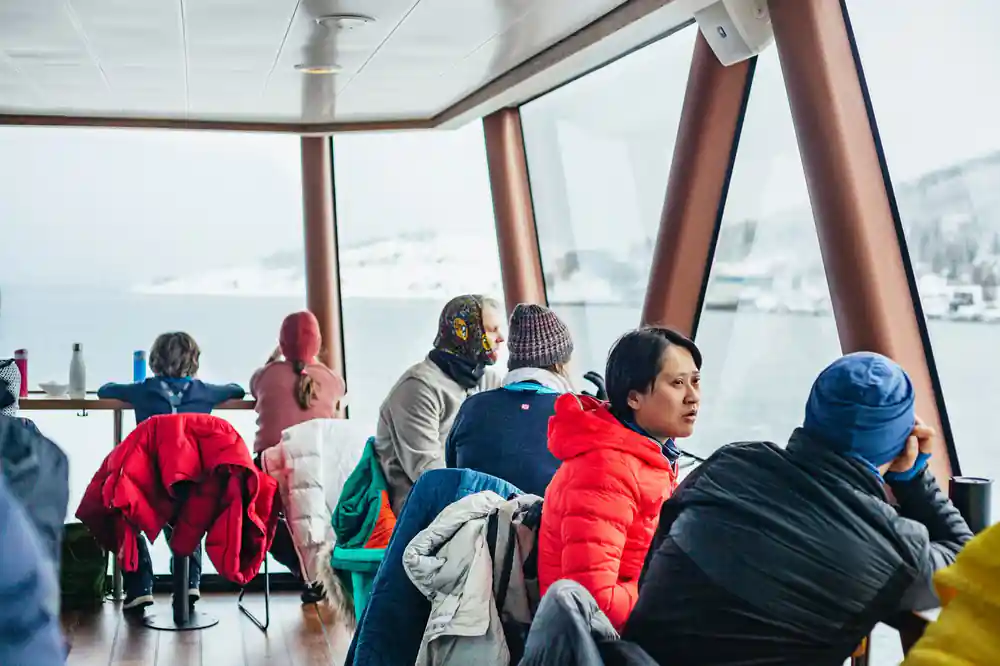
- Position close to panoramic glass at a 45-degree angle to reduce reflections. Polarizing filters cut glare; increase exposure by one-third stop when shooting through panes.
Blue Hour and Polar Night Settings
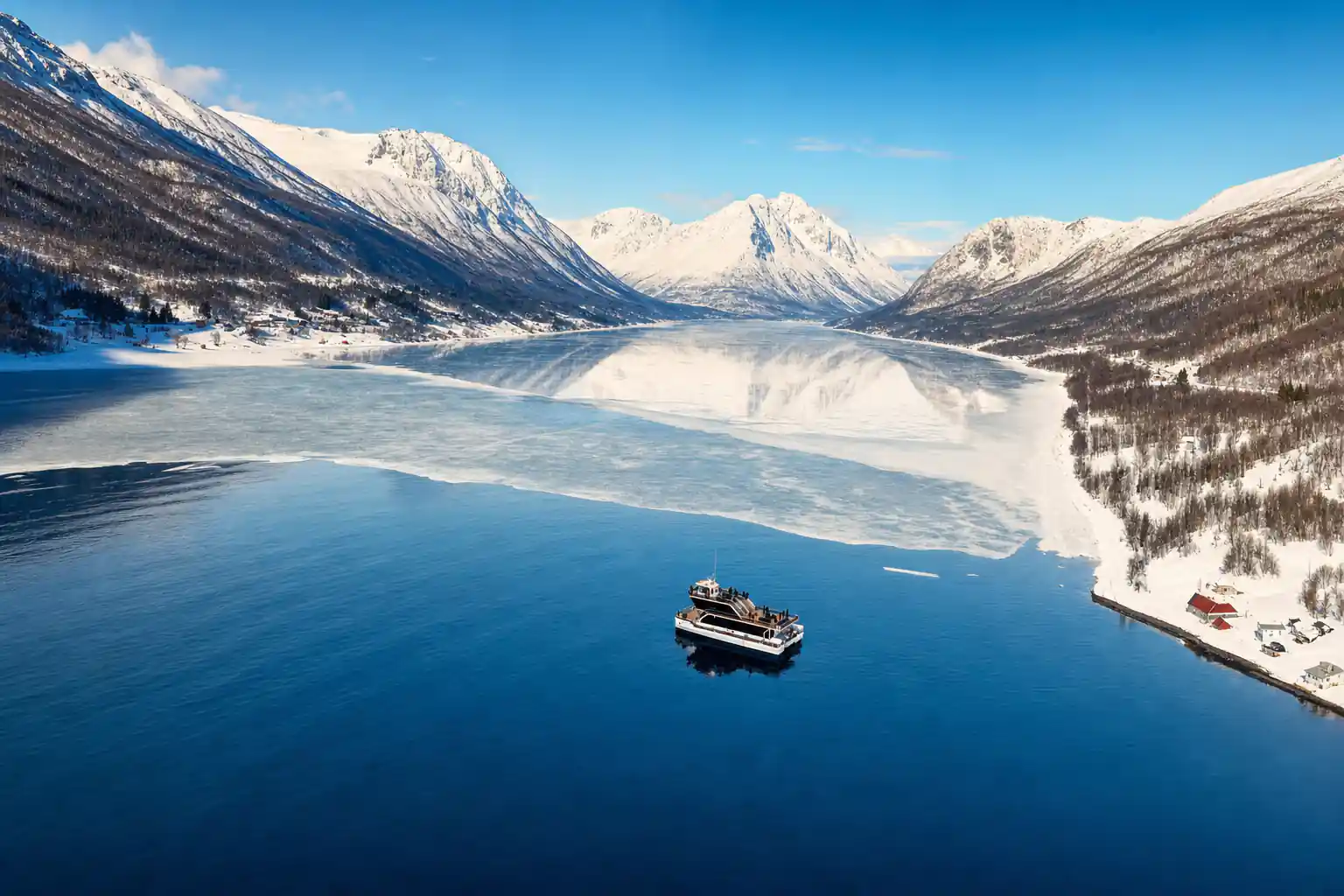
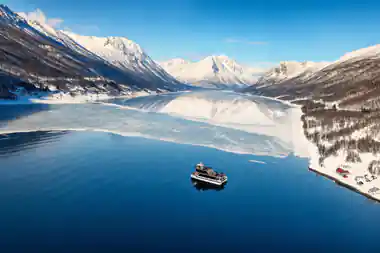
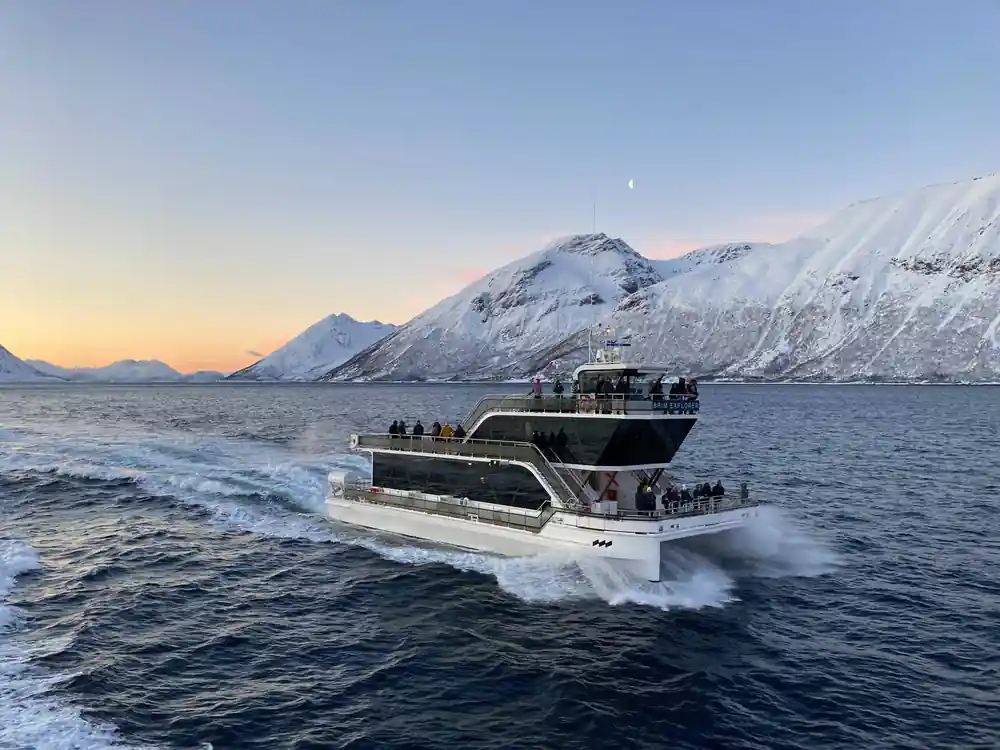
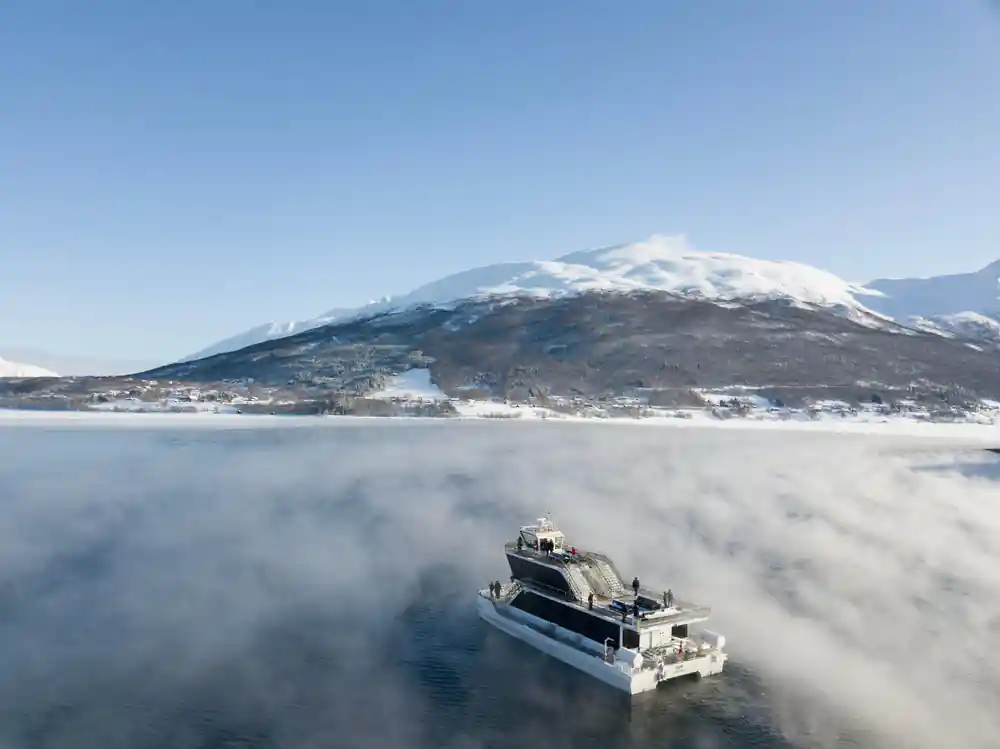
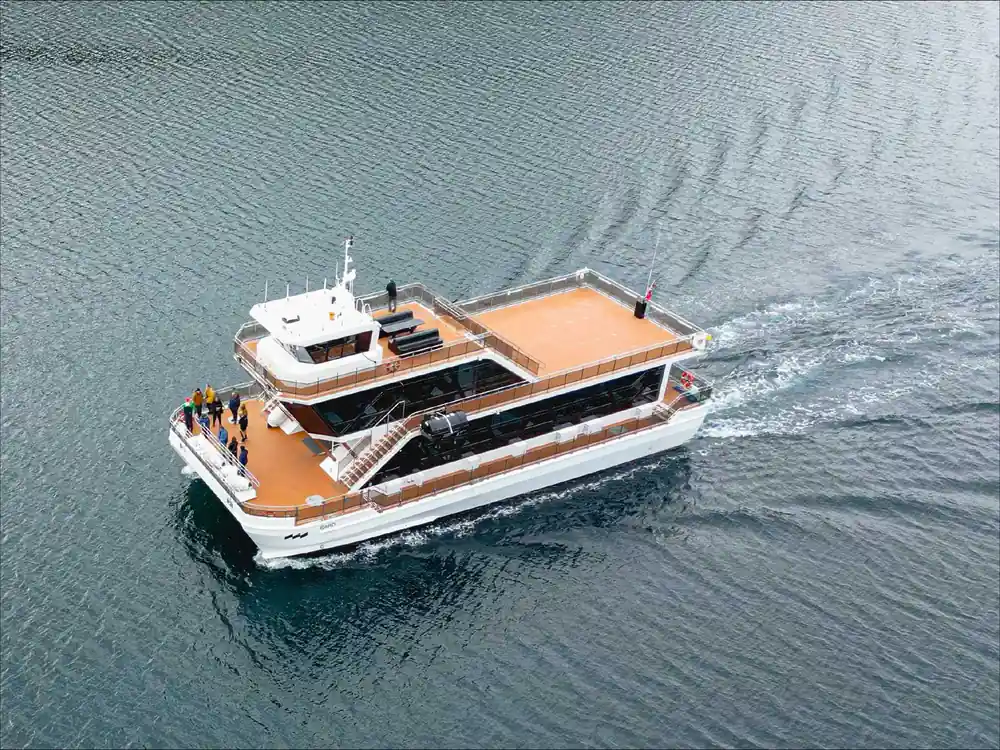
As your catamaran moves through Ramfjorden and beyond, the light quality shifts dramatically across the four-hour sailing. During blue hour, when the sun hangs low on the horizon, your camera needs an ISO between 1600 and 3200 with an aperture of f/2.8 to f/4 to capture the fjord's moody palette. Shutter speeds around 1/125th second work well for handheld shooting from the moving deck. If polar night conditions arrive, push your ISO higher (up to 6400) and widen your aperture fully, accepting some softness in exchange for usable exposure.
The colour temperature shifts as afternoon moves toward dusk. Set your white balance to 4000K initially, then adjust toward 3200K as light fades. Shoot in RAW format so you can fine-tune the warmth in post-processing without losing shadow detail in the water and rock faces surrounding the fjords.
Photographing Eagles at Distance from Deck
White-tailed eagles patrol these northern waters, but they rarely approach close enough for standard lenses. A telephoto lens of at least 200mm is essential; 400mm or longer gives you frame-filling shots even when birds are distant. Your shutter speed should stay at 1/1000th second or faster to freeze wing motion, particularly when the vessel rocks. Brace yourself against the railing or cabin wall to stabilise your body, reducing camera shake that a long lens will magnify.
Expect autofocus to hunt occasionally in low light. Switch to continuous AF mode (AF-C or AI Servo) so the camera tracks the eagle as it glides. Pre-focus on the area where you anticipate the bird will be, rather than waiting for it to appear in your frame. Patience and a high burst rate increase your odds of capturing sharp flight sequences.
Shooting Through Panoramic Windows
The vessel's large windows offer shelter and unobstructed views, but glass introduces its own challenges when photographing the fjords. Position yourself at an angle to the window rather than straight-on to minimise reflections of interior lights. Polarising filters work well here, cutting glare and deepening the sky, though they may slightly reduce light entering your lens in the blue-hour conditions typical of Arctic sailing.
Clean glass where possible before shooting. Interior reflections become more pronounced as external light fades, so you may need to cup your lens hood against the window or drape a dark cloth around your shooting position. Shoot at f/5.6 or smaller to ensure the window's imperfections stay out of focus.
Managing Cold Weather Gear and Lens Care
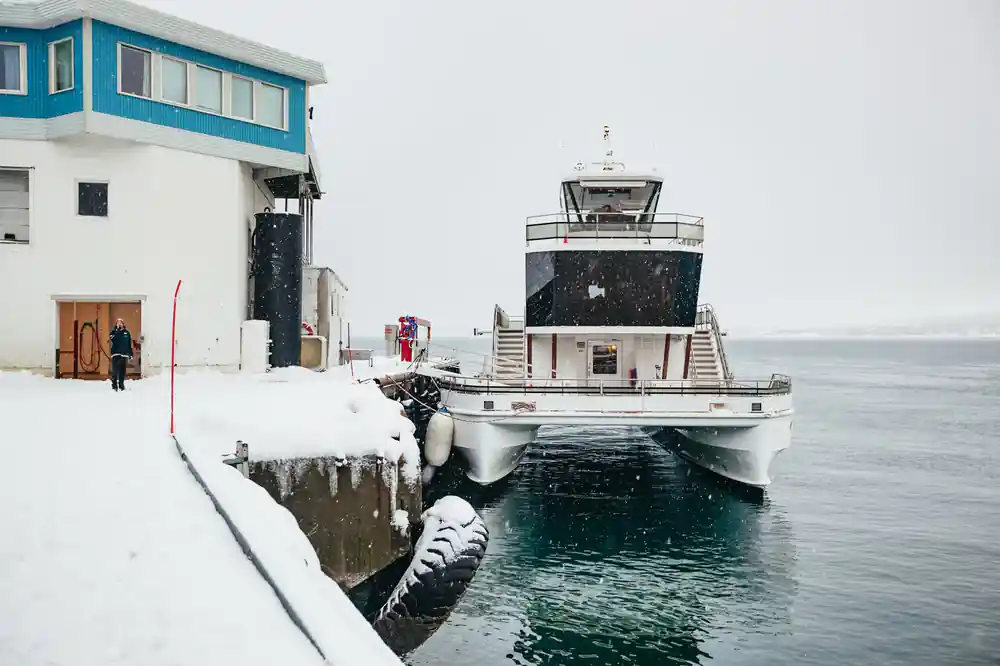
Northern waters demand protection for both you and your equipment. Condensation is your main enemy: when you move between the cold deck and a warmer cabin, moisture can fog your lens and damage internal electronics. Keep your camera in an insulated bag during transitions, and allow 20-30 minutes for it to acclimatise before opening it indoors. Store silica gel packs in your camera bag to absorb ambient moisture.
On deck, use a lens hood at all times to shield glass from salt spray and wind-driven water. If your lens does fog, do not wipe it immediately. Instead, keep it sealed and let it warm up gradually. Bring lens cloths rated for cold weather and store them in an inside pocket so they remain dry and pliable. Wear gloves designed for camera operation; thick insulated gloves make button work impossible, so choose thinner options that still offer adequate warmth.

Optimal Light Windows During a Four-Hour Cruise
Your journey through Tromsø and surrounding waters divides into distinct lighting phases. In the first hour, if you depart in late afternoon, expect warm golden light that flatters the landscape and enhances texture on rock faces. The second and third hours deliver the most dramatic blue-hour conditions as the sun approaches the horizon, creating rich saturated colours in water and sky. This is your prime window for moody, high-impact images.
The final hour may bring very dim conditions depending on season. Here, telephoto work for distant eagles becomes challenging without extreme ISO values. Instead, focus on wide compositions that capture the scale of the fjords and the silhouettes of coastal features against the remaining glow.
Camera Phones and Aurora Possibilities
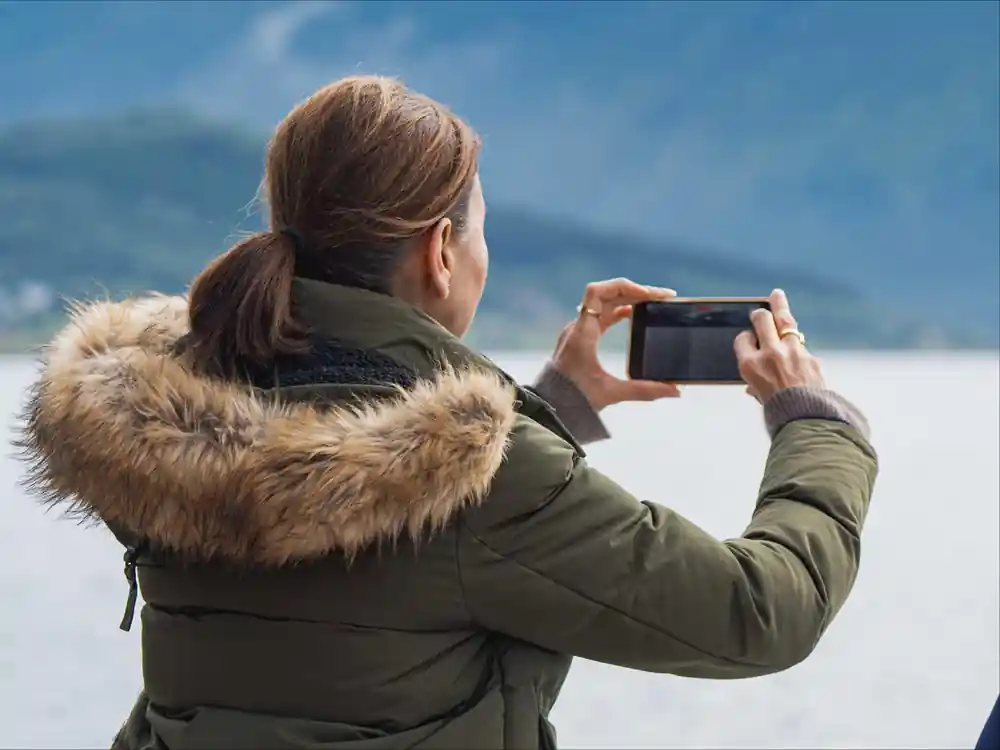
Modern smartphone cameras perform surprisingly well in low light, though a moving boat introduces additional challenges. If aurora appears during your sailing, newer flagship phones (iPhone 14 Pro or equivalent) can capture faint green displays when propped against a stable surface. Set exposure compensation to +1 or +2, enable night mode, and hold the device absolutely still for 5 to 10 seconds.
From a moving catamaran, stabilising a phone becomes nearly impossible without a tripod or makeshift support. Smartphone computational photography struggles more than dedicated cameras do with colour accuracy in extreme cold, and the small sensor clips highlights quickly. Treat phone shots as supplementary to your main camera work rather than as your primary capture method.
Charge Your Lens for Arctic Light
from US$157Reserve now & pay later