At a glance
- Wooden stockfish racks line the Arctic shore, part of a thousand-year tradition of preserving cod without salt or heat.
- Cod hangs suspended in Arctic air for several months, transforming into stockfish through natural wind and cold alone.
- Millions of skrei cod travel to these northern waters each winter, drawn by conditions that make them ideal for drying.
- Norwegian stockfish ships to markets across Europe, Africa, and beyond, continuing centuries of maritime commerce.
- Visit the working drying yard and local museum to witness this living heritage and experience the authentic Arctic trade story.
Millions of Skrei Return Each Winter
Every January through April, millions of Atlantic cod known as skrei undertake one of the ocean's most remarkable migrations. These fish travel from the Barents Sea northward to the cold waters around Tromsø, drawn by spawning instinct and abundant food. The name skrei comes from an Old Norse word meaning 'to wander', and for over a thousand years, local fishermen have timed their work around this predictable arrival. The journey itself spans hundreds of kilometers, and the fish arrive in peak condition, their flesh firm and oil-rich from feeding in arctic waters.
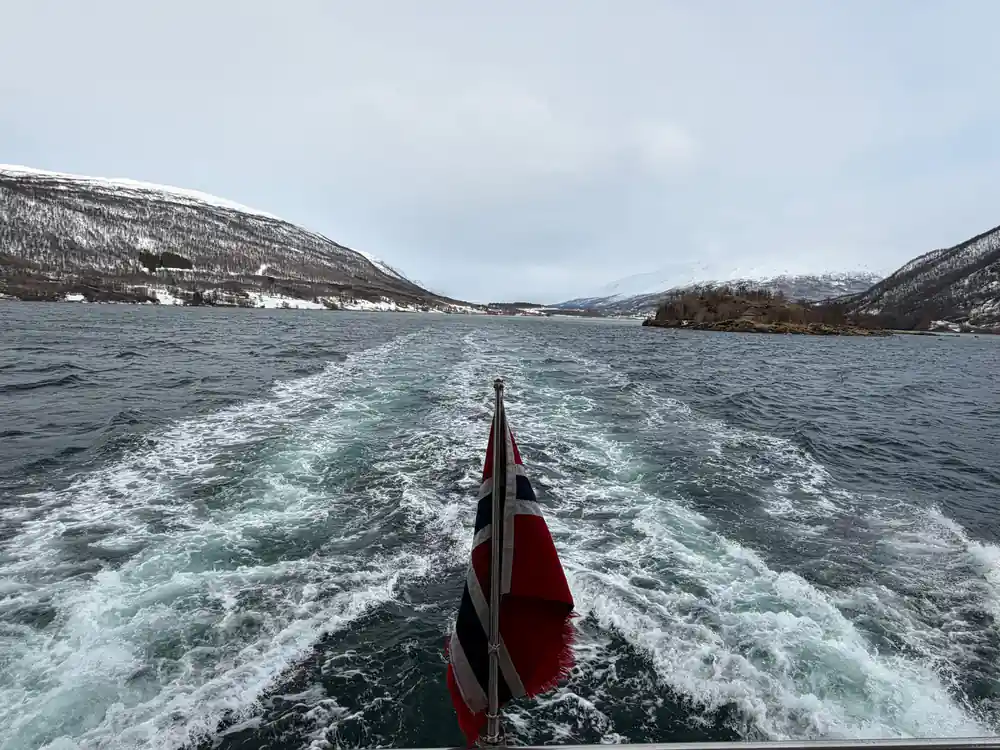
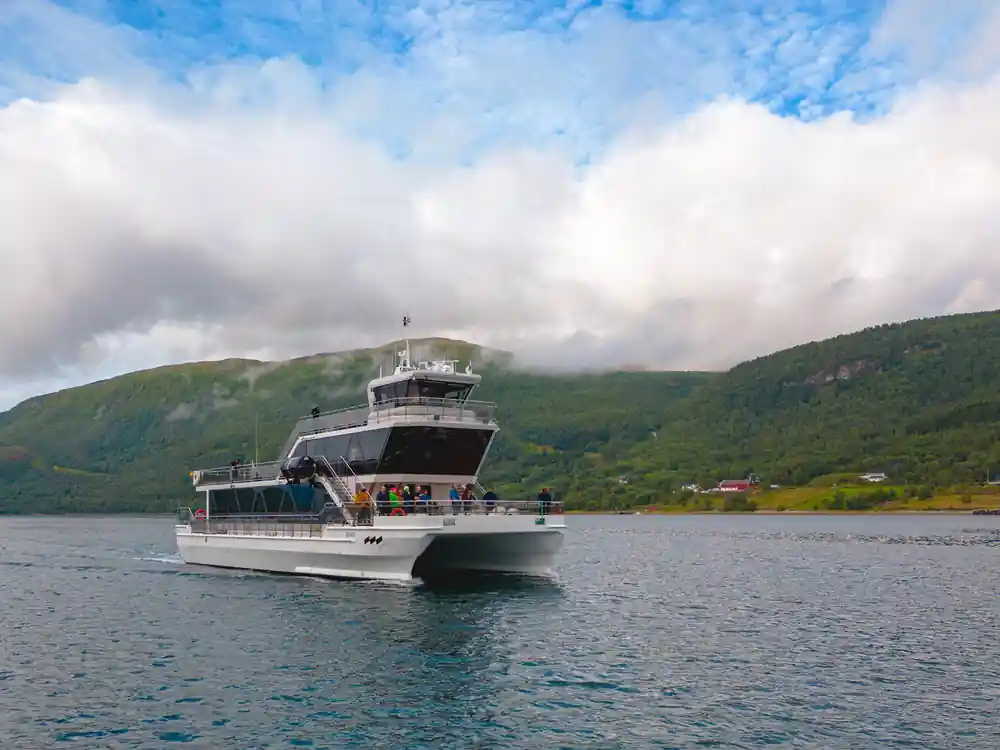
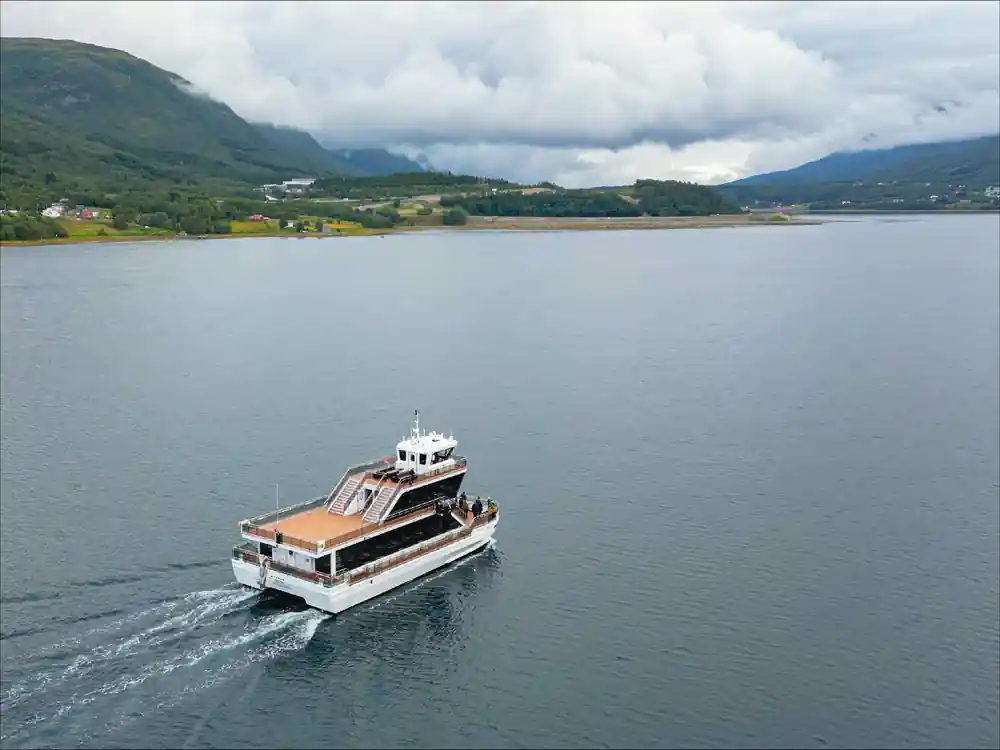
During the cruise, your catamaran enters Ramfjorden and the waters where these migrations concentrate. Marine life viewing from the boat reveals the ecosystem supporting this abundance. The skrei's arrival shaped the entire economy of northern Norway, making these fjords among the most valuable fishing grounds in the world. When you approach the fish racks at the land stop, you are standing at the end point of a supply chain that has operated continuously since the Viking age.
How Wind and Cold Create Stockfish Without Salt
The wooden racks lining the Tromsø shore are not decorative. They are working drying frames, and the process they enable requires only three ingredients: fresh skrei, arctic wind, and sub-zero temperatures. Unlike salt-cured fish made in warmer climates, Norwegian stockfish uses no preservatives at all. The fish are split down the spine, hung on the racks in pairs, and left to the elements. The combination of bitter cold and steady wind removes moisture while the low temperature prevents bacterial growth. This method has remained unchanged for centuries because the climate makes it work perfectly.
Drying takes between three and four months depending on weather and fish size. By spring, when the process completes, the stockfish has lost 80 percent of its original weight but gained extraordinary shelf stability. The transformation is chemical and physical: the flesh becomes dense, the flavor concentrates, and the product can be stored for years without refrigeration. When you visit the land stop, you will see the racks in their actual working state, weather permitting. The sensory experience is immediate and memorable; the ammonia-rich smell from centuries of drying fish is as famous as the racks themselves.
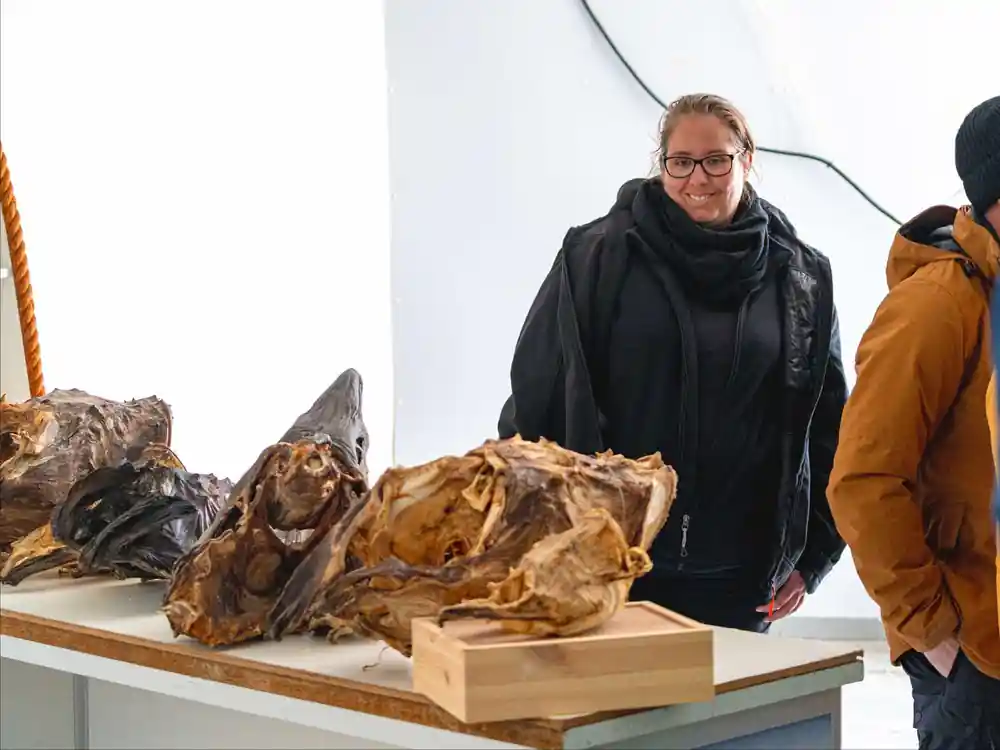
Arctic wind dries cod on centuries-old racks, the scent of the sea's trade
Dried Fish as Currency in Viking and Hanseatic Trade
From the 10th century onward, stockfish became a form of currency more reliable than silver. Viking traders discovered that dried cod could be transported across Europe without spoiling, making it ideal for long voyages and distant markets. By the 13th century, the Hanseatic League, a powerful federation of merchant cities, controlled much of the stockfish trade. German, Dutch, and English merchants established trading posts in Bergen and competed fiercely for Norwegian supply. The fish racks visible from your boat represent not just a food product but the foundation of medieval international commerce.
Stockfish funded the construction of cathedrals, the raising of armies, and the expansion of trade routes from London to Constantinople. A standardized unit called a 'drying' measured exactly 60 fish and became accepted as payment across borders. Wealthy merchants and nobles kept stockfish in warehouses as wealth reserves. The commodity financed exploration, settlement, and the development of northern European cities. The small museum at the land stop tells this economic story through artifacts and documents, showing how a simple drying rack on a Norwegian shore became essential to shaping medieval and Renaissance Europe.
The Local Producer and Land Stop Experience
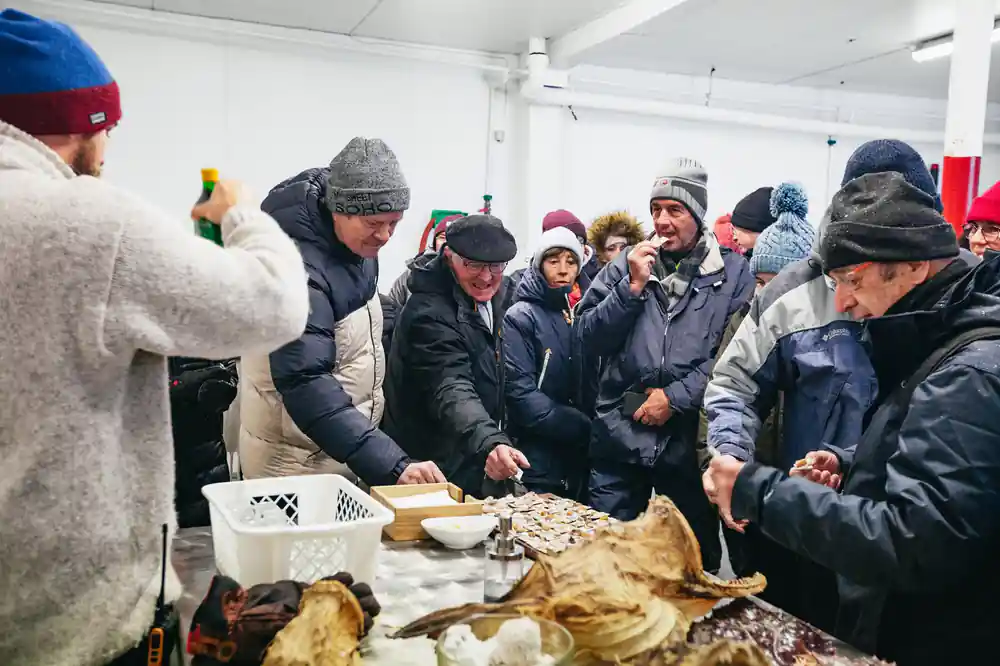
Your catamaran ties up at a working fishing station where local producers continue the tradition. This is not a museum display but an active site where skrei are processed seasonally. The land stop (weather dependent) allows you to walk the actual drying racks, examine fish in various stages of preparation, and understand the physical labor involved in the process. You will meet people whose families have worked these waters for generations and whose knowledge spans both traditional and modern fishing practices.
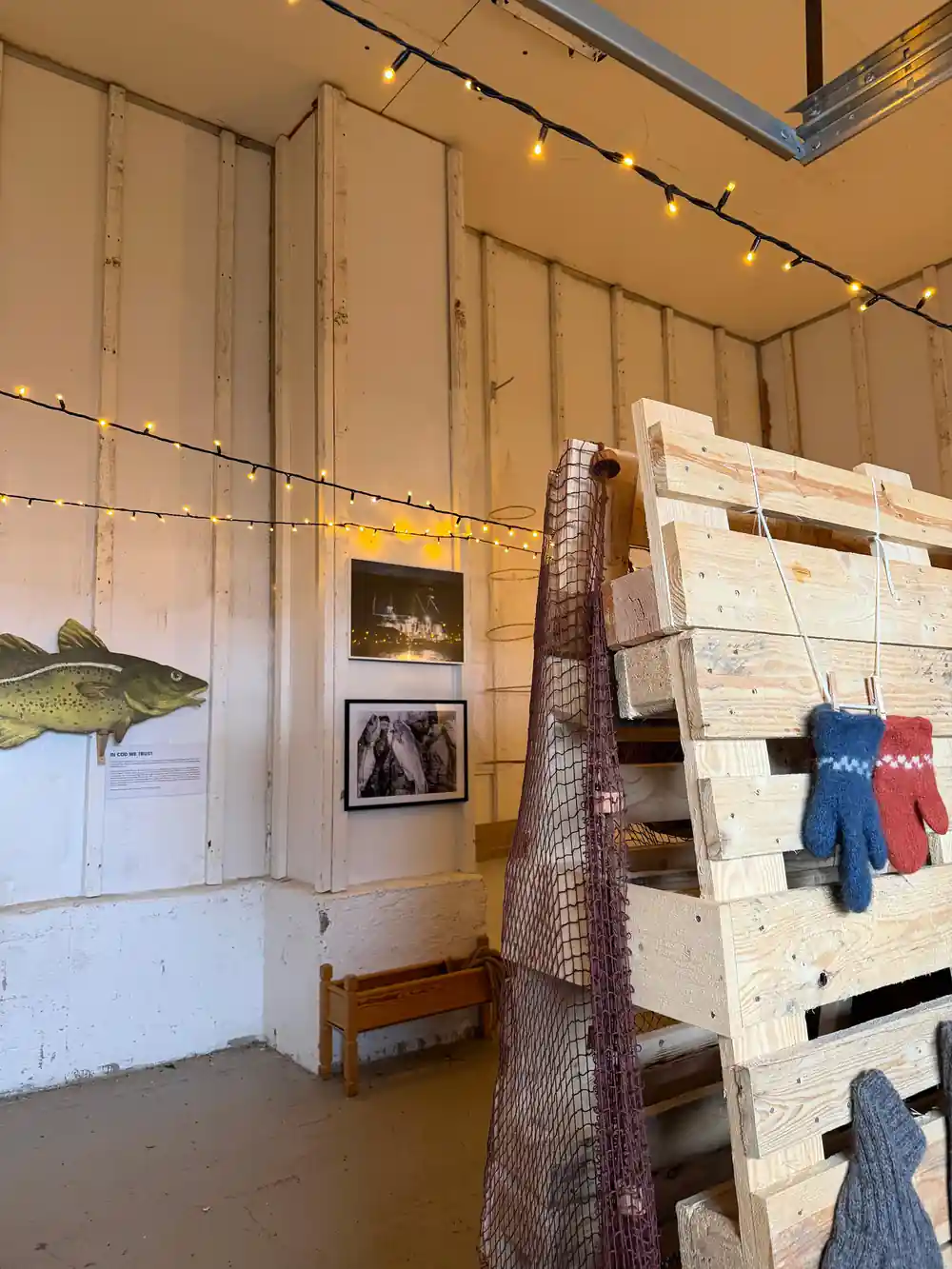
The small museum on the site presents the history of stockfish through photographs, historical tools, equipment, and documents spanning centuries. Exhibits explain the migration patterns, the chemistry of preservation, and the trade networks that moved dried fish across Europe. You will see examples of how stockfish was graded, bundled, and shipped. The museum answers the specific questions visitors ask: exactly how long fish hang on the racks, why the racks are positioned facing the wind, and how the quality was controlled. Local foods showcase the culinary heritage built on this foundation, giving you taste of the region's food culture tied directly to the commodity you have learned about on the water.
4
Cod hangs on these racks for up to four months, transforming into stockfish prized across the globe.
Wildlife Viewing Along Ramfjorden and Beyond
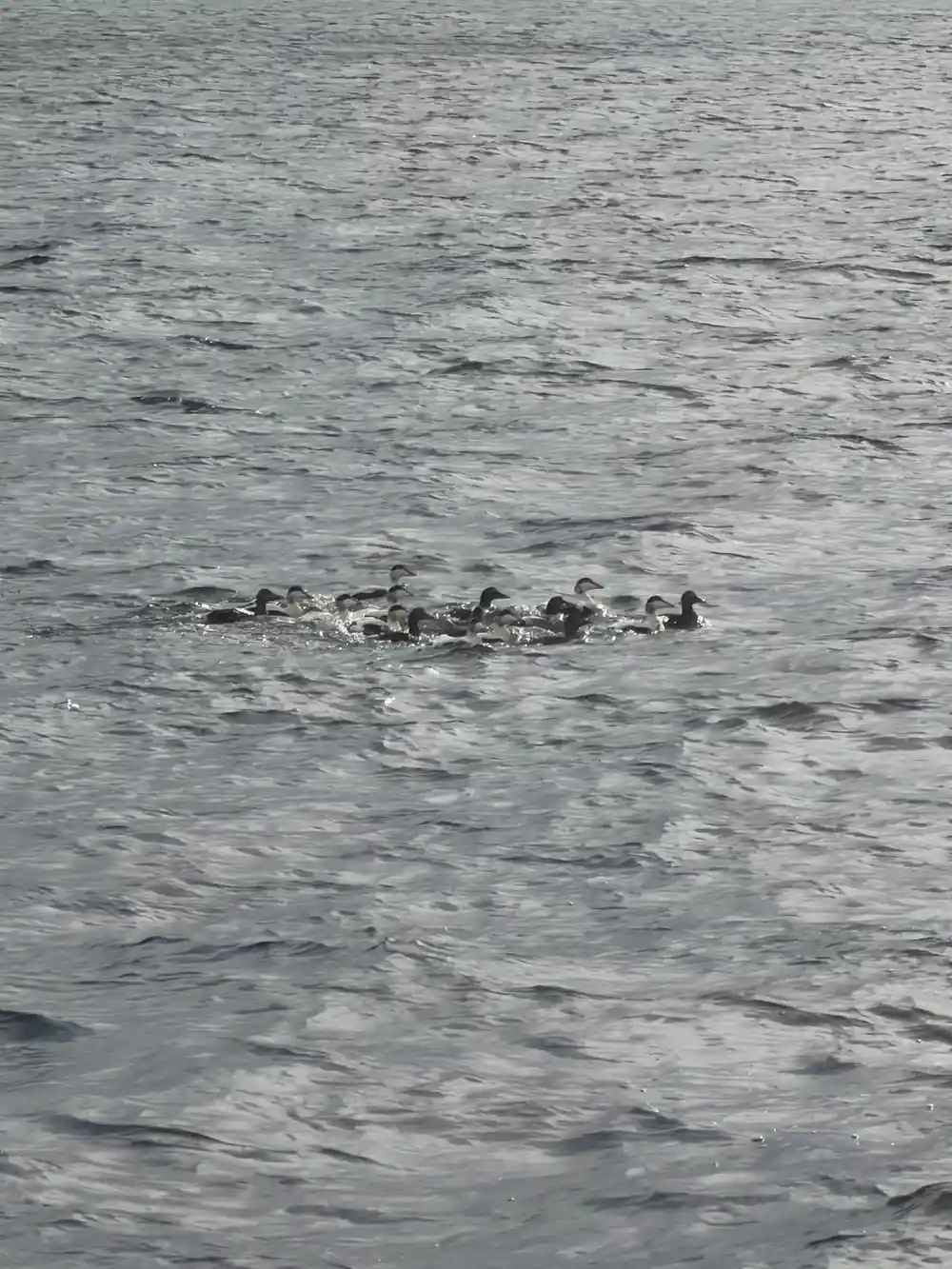
The catamaran cruise takes you through waters rich in both marine and bird life. Eagles soar above the fjords, hunting the same fish stocks that drew the skrei migration. Seals and other marine mammals inhabit these bays. The route passes Store Grindoya and Rystraumen, locations chosen specifically for wildlife concentration. Your professional guides carry knowledge of local animal behavior, seasonal patterns, and the ecosystem relationships that make these waters productive. They can identify species at distance and explain the signs of healthy populations.
An underwater drone (weather dependent) extends your viewing below the surface, exploring the kelp forests that fish feed within and that protect young cod. The kelp grows densely in these cold waters and creates complex habitat structure that supports the entire food web. Seeing it on the drone provides context for understanding why skrei travel here specifically and why these fjords have supported fishing for a thousand years. The combination of surface observation and underwater footage creates a complete picture of why this particular stretch of arctic coast became so valuable.
Six Stops Along the Fjord Journey
The four-hour cruise itinerary includes seven distinct locations: Tromsø where you depart, Ramfjorden where you begin fjord viewing, the designated marine life viewing areas, Rystraumen where currents concentrate wildlife, Rya, Store Grindoya with its visible bird populations, and Tirpitz-platen. Each stop serves a specific purpose in revealing the coastal landscape and ecology. The route has been refined over many seasons to maximize chances of wildlife encounters while providing the best views of the dramatic bays and mountainous coastlines. The catamaran's design allows comfortable viewing from multiple positions on deck and from sheltered areas if weather changes.
Planning Your Arctic Fjord Experience
The cruise duration is four hours, making it suitable for a half-day excursion that leaves time for other activities in Tromsø. Winter months (January through April) offer the best conditions for skrei fishing, active drying racks, and the possibility of northern lights during evening hours. Spring and early autumn provide milder weather and extended daylight. Your local professional guides will interpret the landscape, explain the history you are witnessing, and answer questions about both the natural and human dimensions of the fjords. The weather-dependent elements (land stop and underwater drone) mean conditions on the day determine what you experience, but the core cruise itself operates across seasons.
Smell the Arctic air at the fish racks
from US$157Reserve now & pay later