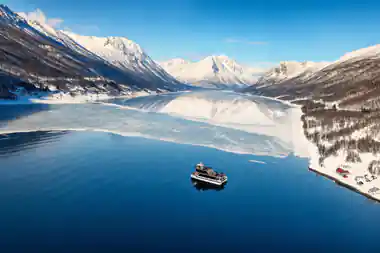
At a glance
- Watch for Norway's iconic sea eagles with 2.4-metre wingspans hunting above the fjords and coastal waters throughout the route.
- The powerful tidal currents at Rystraumen concentrate fish and marine life, making this stretch a reliable hotspot for wildlife encounters.
- An underwater drone reveals the Arctic kelp forest ecosystem, showing the creatures and plant life hidden beneath the surface.
- Porpoises and seals are seen on this route. Orca and humpback whales chase herring seasonally through these same waters.
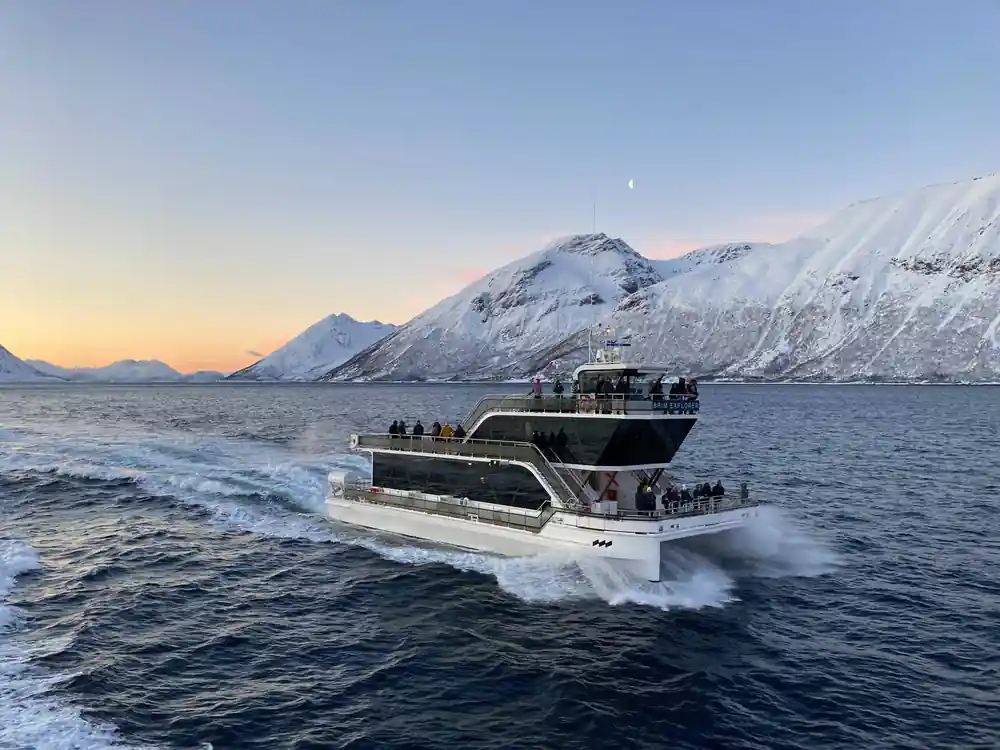
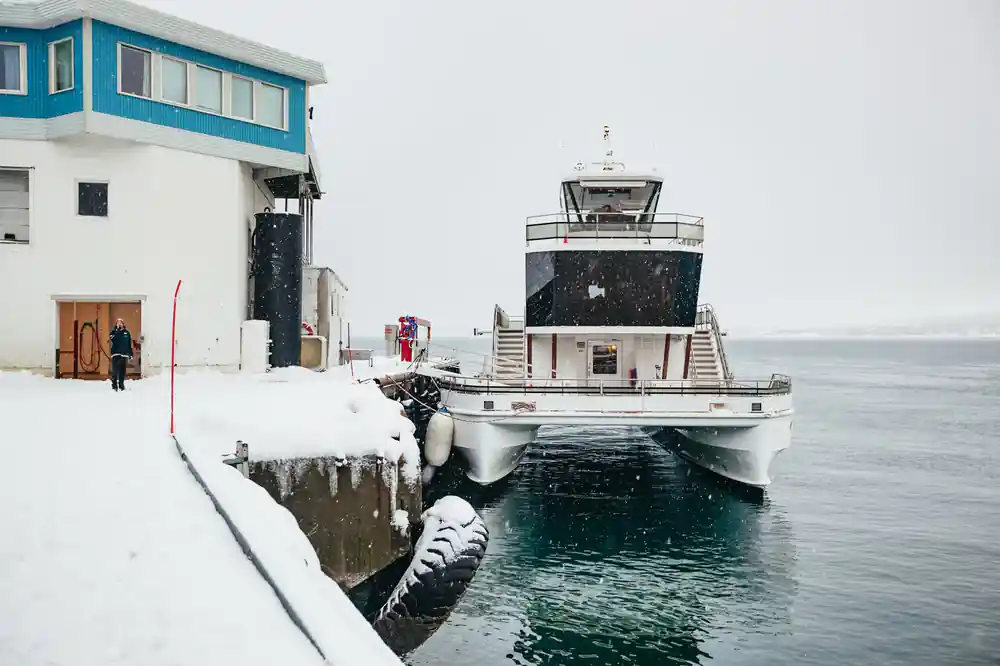
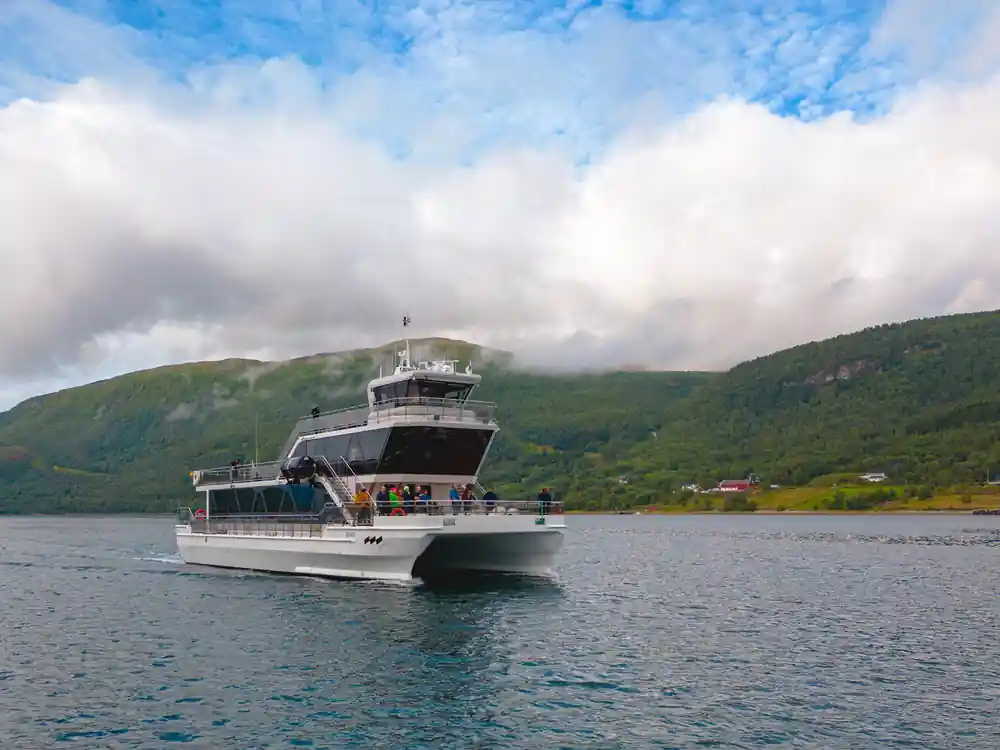
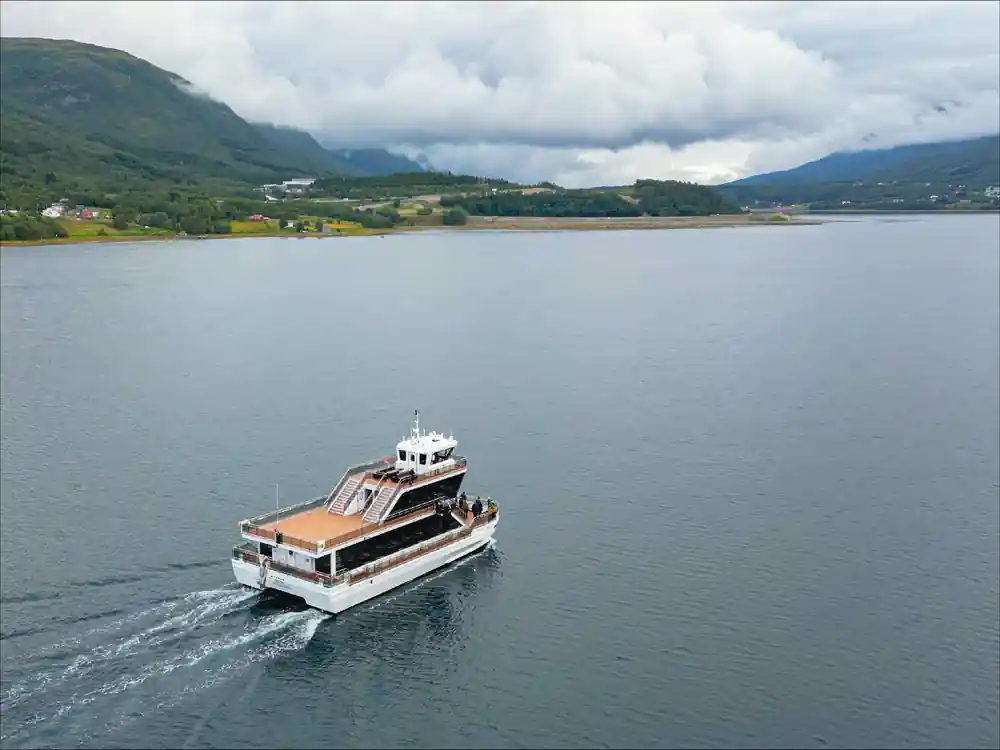
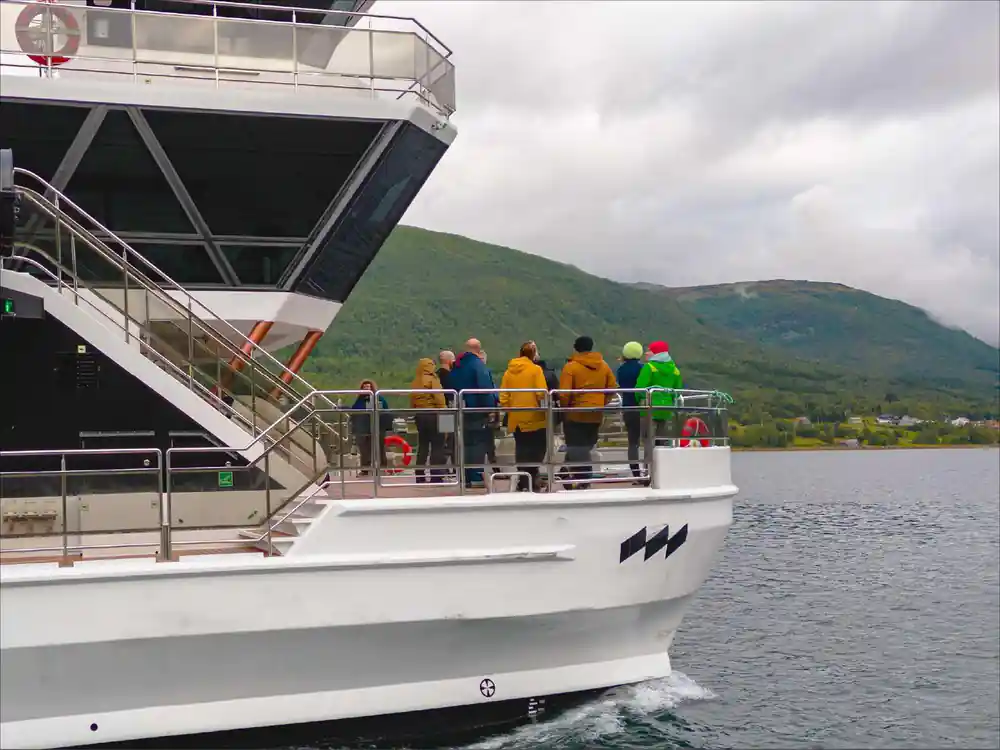
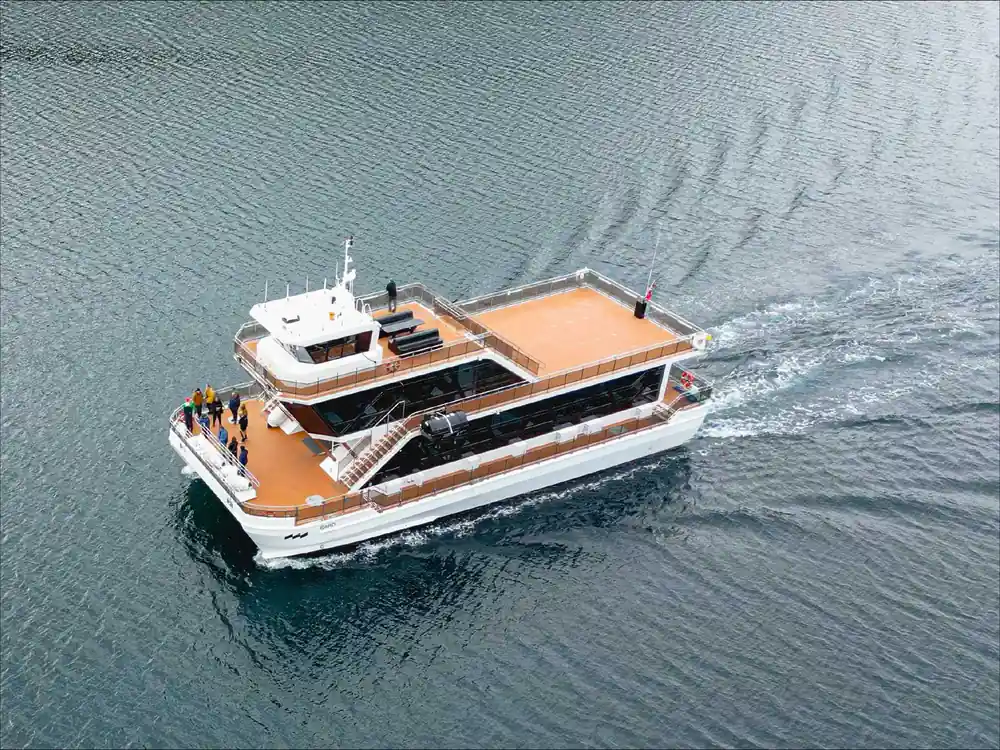
- Store Grindoya and surrounding islands host nesting seabirds. The catamaran's electric hull reduces noise, improving wildlife viewing chances.
White-tailed Eagles: Apex Hunters of the Arctic Sky
The white-tailed sea eagle dominates the Tromsø fjords with a wingspan reaching 2.4 meters, making it one of Europe's largest raptors. These dark brown birds with distinctive pale heads and massive hooked beaks hunt across the bays and fjords you'll cruise through, diving from high perches to snatch fish from the water's surface. Unlike smaller gulls that dart and hover, sea eagles commit to explosive dives, their powerful talons designed to grip slippery prey with crushing force. On this 4-hour route through Ramfjorden, Rystraumen, and around Store Grindoya, sightings are most common in the morning when thermal currents help them gain altitude and scan wider territories.
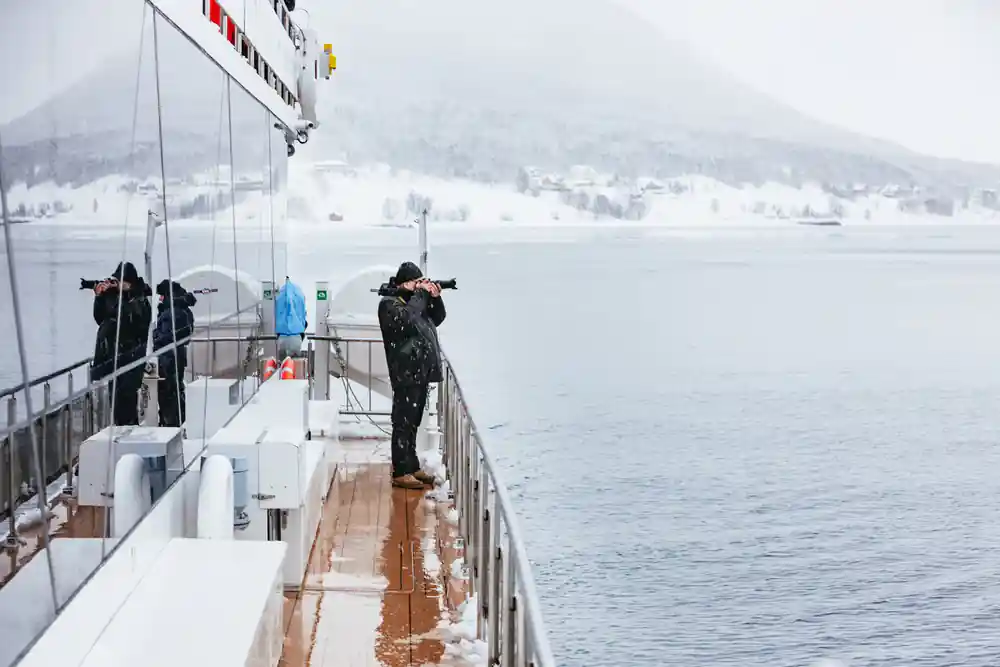
Watch the cliff edges and tall pine trees fringing the fjord walls, particularly near Rya and Store Grindoya where nesting pairs establish territories. The catamaran's silent approach gives you genuine chances to observe these birds before they're startled into flight. Eagles in this region have made a remarkable recovery from near extinction, and their presence signals a healthy ecosystem with abundant fish stocks below the surface. Binoculars reveal the intensity in their yellow eyes and the subtle plumage patterns that distinguish adults from younger birds still developing their characteristic white tail feathers.
Seabird Colonies and Nesting Grounds Around Store Grindoya
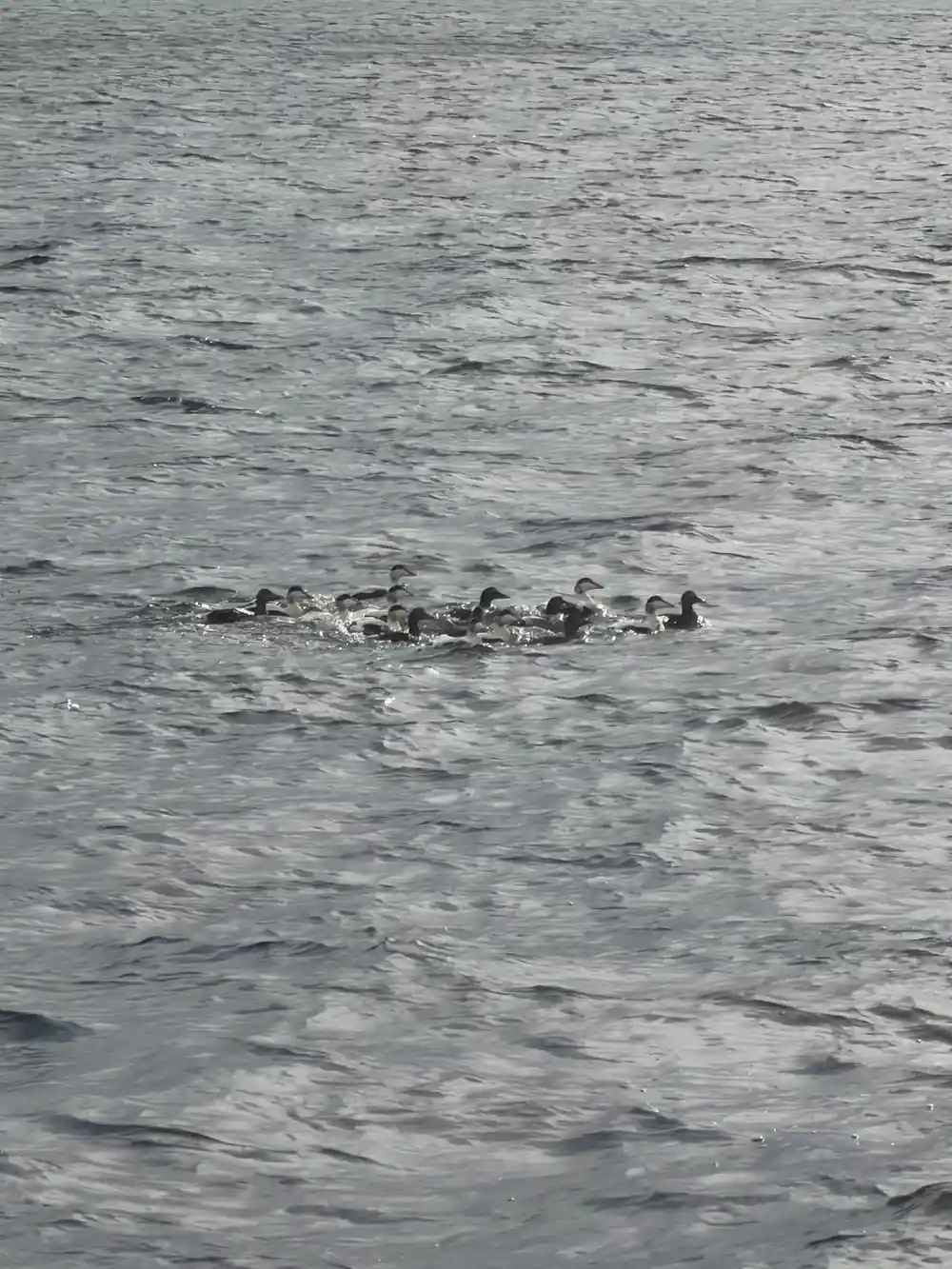
Store Grindoya hosts thriving colonies of auks, cormorants, and kittiwakes that nest on rocky ledges inaccessible to land predators. Black guillemots return to the same crevices year after year, their red feet and white wing patches visible through binoculars as they ferry small fish to hidden chicks. Razorbills, slightly larger relatives of the puffin, dive to depths of 30 meters to hunt sand eels and other small fish, then surface with remarkable agility. The air around the island fills with their calls and wing-beats, a cacophony that reflects the sheer density of breeding pairs concentrated on the limited nesting space available.
The catamaran passes close enough to observe behavioral details: watch for cormorants spreading their wings to dry them in the wind, a behavior unique among seabirds that reveals their semi-aquatic diving style. Kittiwakes, delicate gulls with black wingtips, maintain monogamous pair bonds and perform synchronized calling duets that echo across the water. The island's steep cliffs and narrow ledges create a three-dimensional city of birds, with different species occupying distinct elevation zones based on their diving depth and nesting material preferences. Early summer brings fledglings to the water's edge, a brief window when juvenile birds make their first clumsy attempts at fishing.
White-tailed sea eagle diving toward arctic waters
Rystraumen: Where Tidal Currents Build the Food Chain
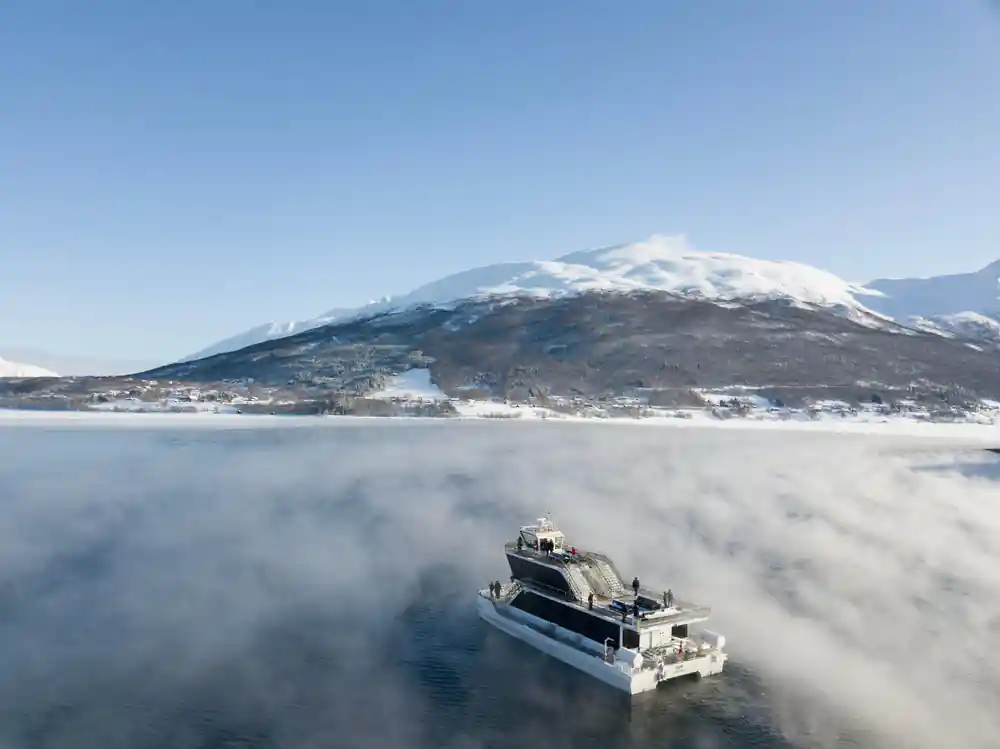
Rystraumen's narrow passage between mainland and islands creates one of the Arctic's most productive feeding zones, where water flows at speeds exceeding 2 meters per second during tidal changes. This relentless movement stirs nutrient-rich bottom waters upward, triggering algal blooms that support the base of the entire food chain. Sand eels, capelin, and young cod swarm into this nutrient explosion, their small bodies packed with the fat reserves needed to survive Arctic winters. Larger fish follow the prey species, and the predators follow them, creating a layered hunting ground visible from the surface if you know where to look.
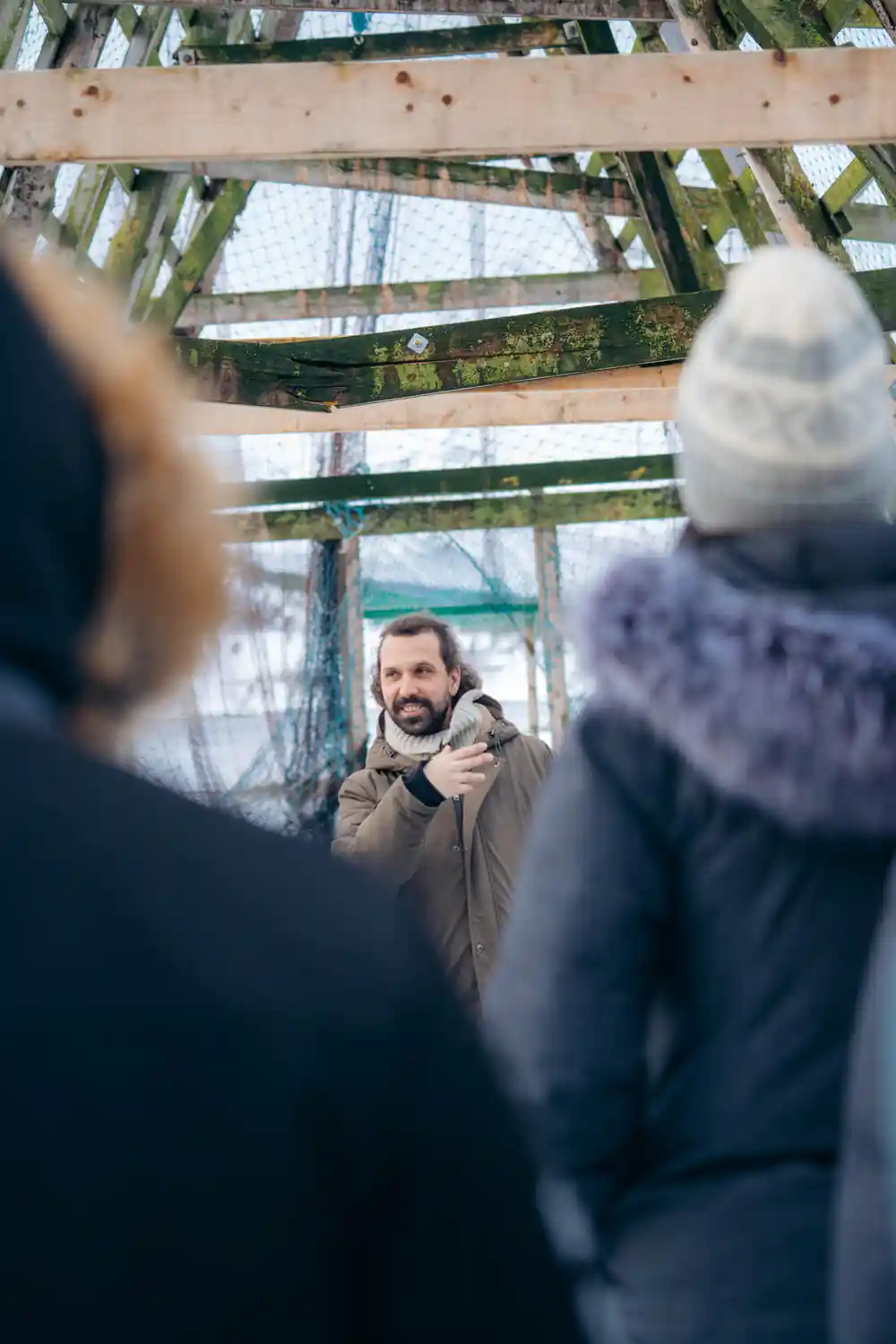
The tidal current's power becomes obvious as the catamaran enters the channel, where water color shifts and surface texture changes noticeably. Local guides can read these subtle signs to position you for optimal viewing of fish activity breaking the surface. The current also concentrates floating debris and plankton aggregations, visible as color shifts and texture changes in the water. This concentration effect means predators don't need to search as hard, leading to more frequent and dramatic feeding events during specific tidal windows.
Kelp Forest Ecosystem Revealed by Underwater Drone
The underwater drone descends into a forest of giant kelp extending 8 to 12 meters down from shallow rocky reefs, its fronds undulating in the current like trees in wind. Sea urchins graze on the holdfasts, their spiny shells camouflaged among the dense vegetation, while decorator crabs carry kelp fragments on their backs as living camouflage. Fish species you won't see from the surface emerge from the drone footage: small saithe and pollack use the kelp as a nursery, their juvenile forms sheltered from faster currents in the dense fronds. The drone's silent approach captures behavior that would vanish instantly if a fishing net or diving human descended into this space.
Kelp holdfasts, the root-like structures anchoring each plant to the seabed, contain hundreds of small invertebrates including brittle stars, amphipods, and sea cucumbers. These creatures breakdown dead organic matter, recycling nutrients back into the water column where they fuel new growth. The drone camera reveals the three-dimensional complexity invisible from above: animals stacked in layers, each occupying a specific height and light zone within the forest. Sea stars, some bright orange and others mottled brown, patrol the kelp blades hunting for invertebrate prey. This underwater footage transforms abstract concepts about Arctic biodiversity into vivid, observable reality.









Winter Herring Runs and Deep-Water Predators
From November through January, massive herring schools move into the fjords to spawn, triggering feeding aggregations rarely matched anywhere in the Arctic. Orcas arrive in pods of 10 to 40 individuals, their distinctive black and white bodies cutting through the water as they herd herring into tighter balls, disorienting prey before feeding. Humpback whales, some weighing 40 tons, use coordinated bubble-net feeding techniques where multiple individuals circle schools while blowing bubbles, trapping herring in a confining column of foam. The surface erupts as whales breach and lunge-feed simultaneously, their mouths opening to engulf thousands of fish in a single gulp.
This seasonal abundance peaks during specific moon phases and tidal conditions that concentrate herring most densely. Local guides monitor ocean conditions and herring movement patterns throughout the winter season to position boats for maximum viewing potential. The herring themselves become visible in the water as dark, roiling masses before the larger predators arrive. Sperm whales and fin whales may also appear during peak seasons, though these deeper-diving cetaceans prove less predictable. Smaller seals and sea eagles join the feeding frenzy, creating a rare moment when the Arctic fjord's entire predator community converges on a single, temporary abundance.
Seals, Porpoises, and Close Encounters with Marine Mammals
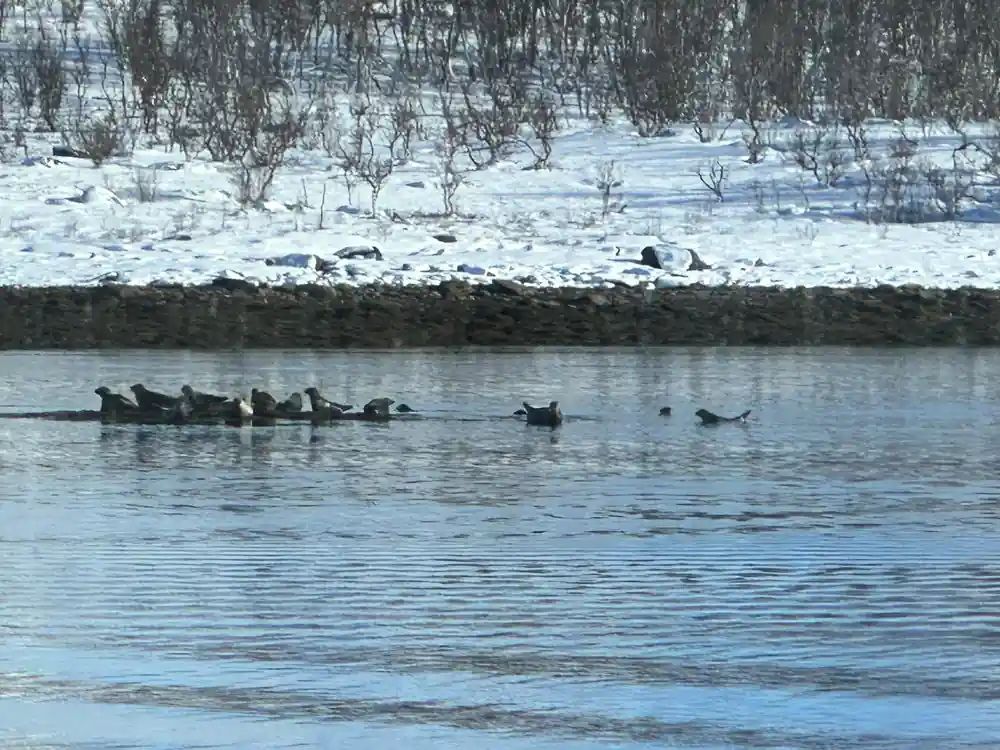
Harbor seals and harp seals haul out on ice floes and coastal rocks throughout the fjord system, their round heads and curious temperament making them approachable subjects for observation. Porpoises, small cetaceans reaching only 1.5 to 2 meters in length, surface briefly and quietly, their low profiles and subtle breathing making them easy to miss without trained eyes scanning the water. Dall's porpoises, if present during your tour timing, move with remarkable speed and agility, creating distinctive V-shaped wakes as they forage. The catamaran's electric hull design minimizes noise and vibration that would startle these sensitive animals, increasing the likelihood of natural behavior rather than avoidance reactions.
Seals demonstrate learned recognition of boats, some individuals becoming semi-tame around regular tour vessels while maintaining appropriate wariness. Watch for hauled-out seals as the catamaran passes rocky outcrops between Rya and Tirpitz-platen, where animals rest between diving bouts. Porpoises often betray their location through their foraging behavior, pushing small fish to the surface in localized areas. The extended daylight hours during the season enable better visibility of these typically elusive animals, revealing behavioral details rarely captured even in wildlife footage.
How Arctic Light and Silent Passage Enhance Wildlife Encounters
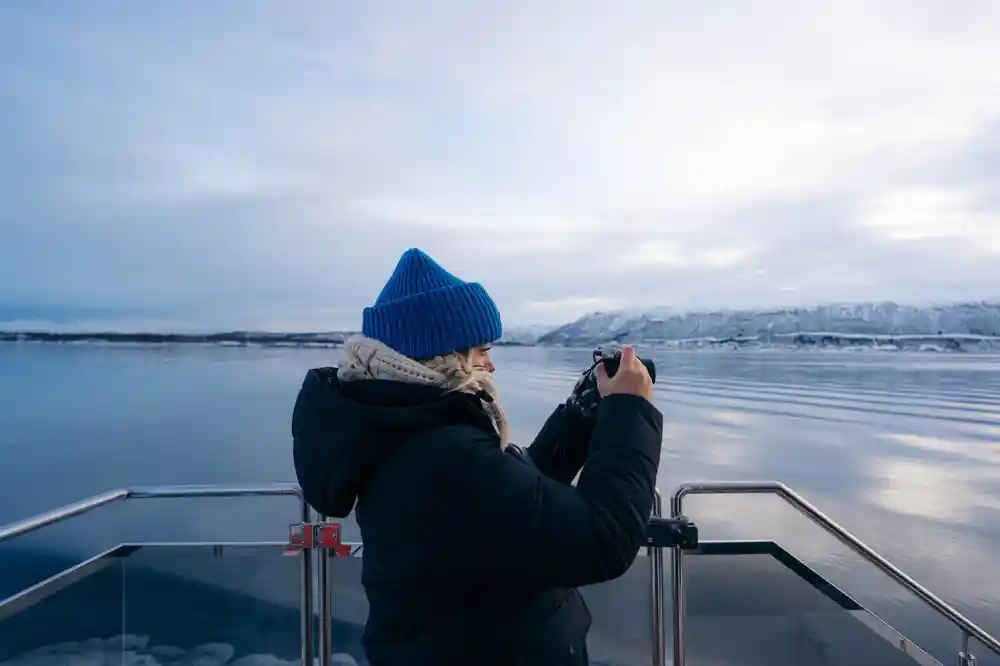
The Arctic's extended daylight during the tour season eliminates the darkness that normally limits observation windows in northern latitudes. Clear light penetrates 15 to 20 meters into the water column on good visibility days, allowing you to spot larger fish shapes and kelp forest structure without relying on drone technology. The catamaran's quiet electric propulsion removes engine noise that travels far underwater, reaching marine mammals' sensitive hearing across several kilometers. This acoustic stealth proves particularly valuable when approaching seabirds and seals, which detect disturbance earlier from noise than from visual stimuli.
Silence also allows guides to hear animal vocalizations: the clicking and buzzing of porpoises echolocating, the calls of eagles and seabirds, the splash of herring disrupting the water surface. These sound cues often precede visual sightings, enabling guides to direct your attention to specific locations before animals disappear. The combination of extended daylight and minimal noise pollution creates conditions that mimic wildlife observation on natural terms rather than through the disturbance lens of industrial tourism. Temperature stability in the Arctic means animals maintain consistent daily movement patterns rather than seeking temperature refuge, making behavior predictable across consecutive days and seasons.
Book Your Seat on the Silent Catamaran
from US$157Reserve now & pay later