At a glance
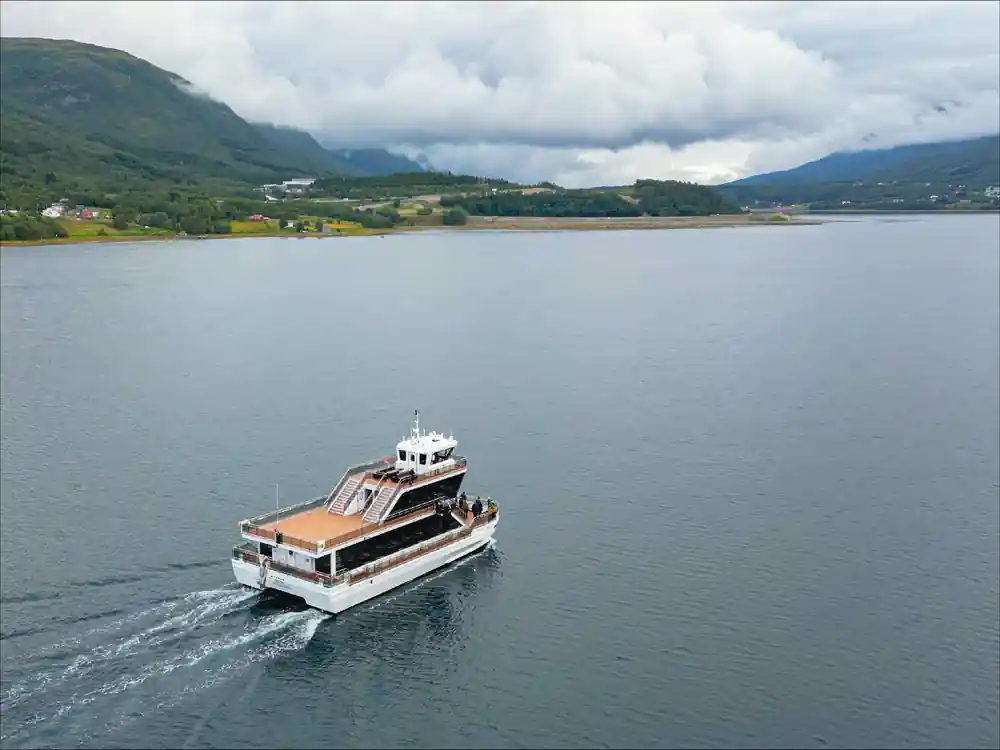
- Hybrid-electric catamaran engines cut to silence in the fjords, reducing emissions while you cruise Arctic waters.
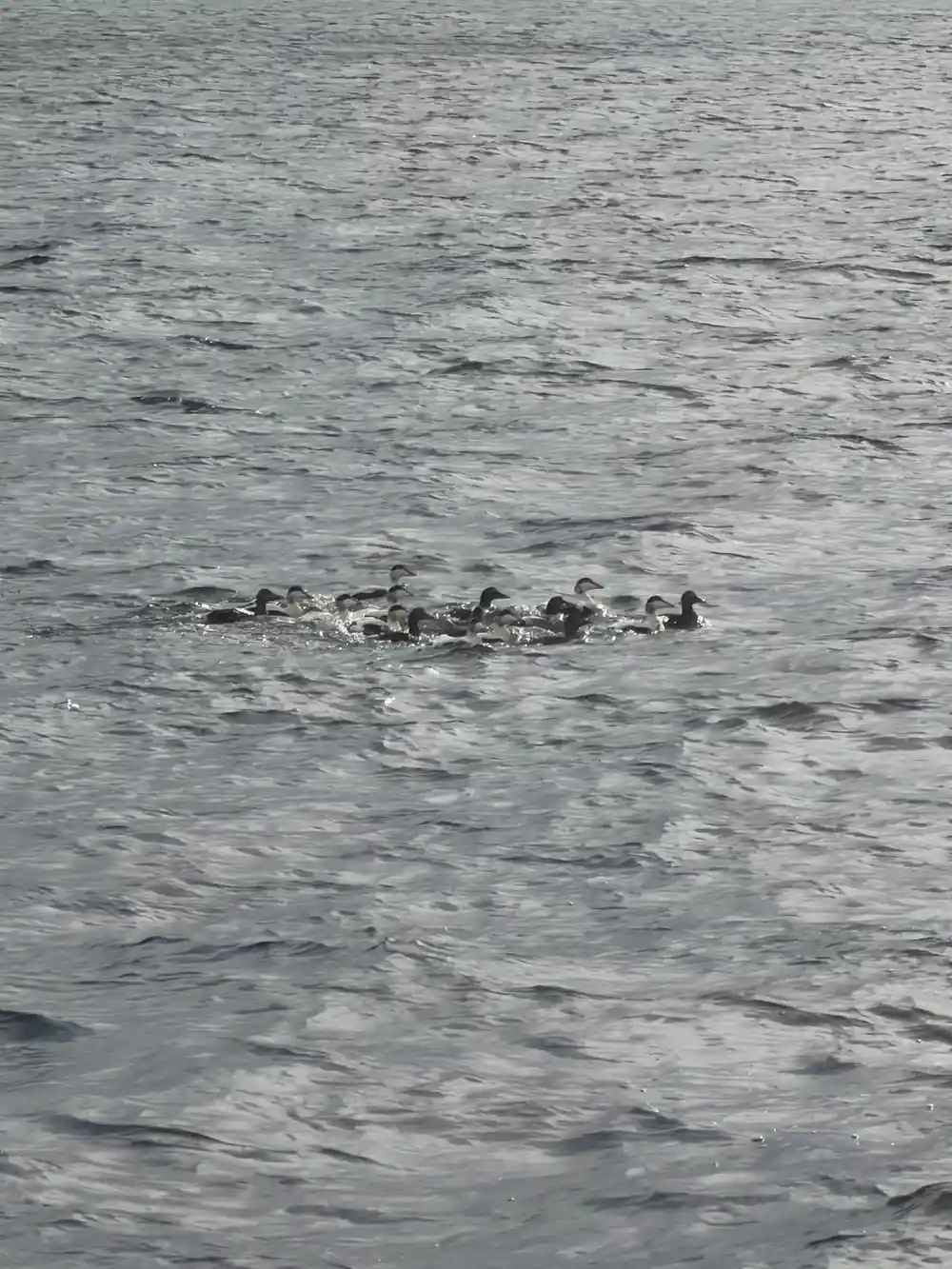
- When batteries take over, engine noise vanishes. Wildlife responds differently in the sudden calm of the Ramfjorden.
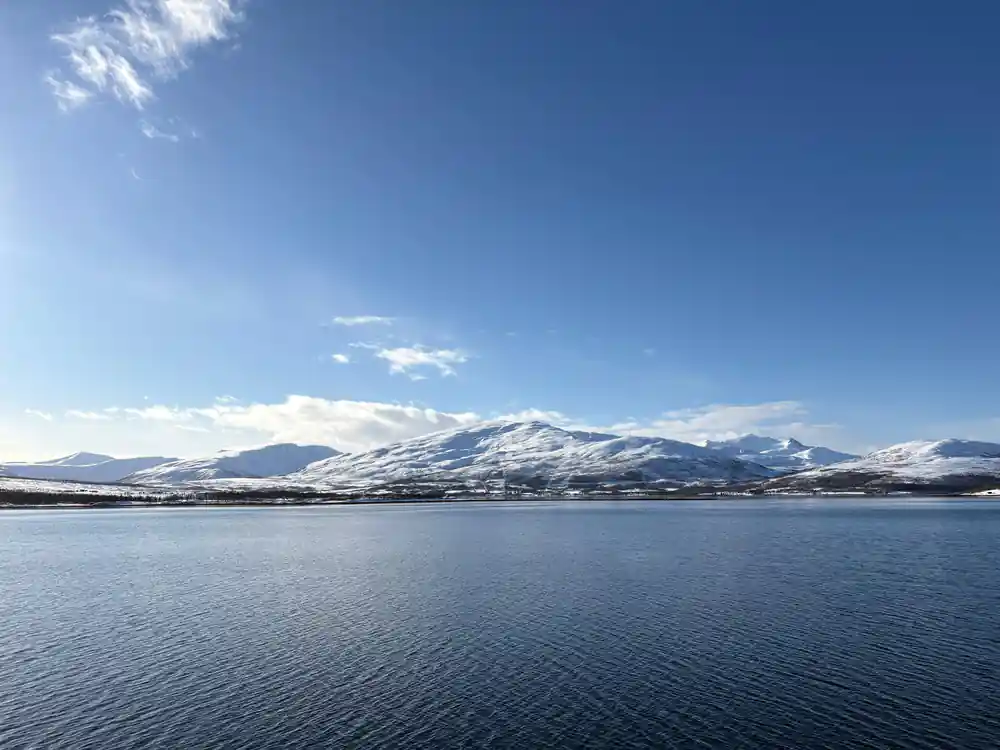
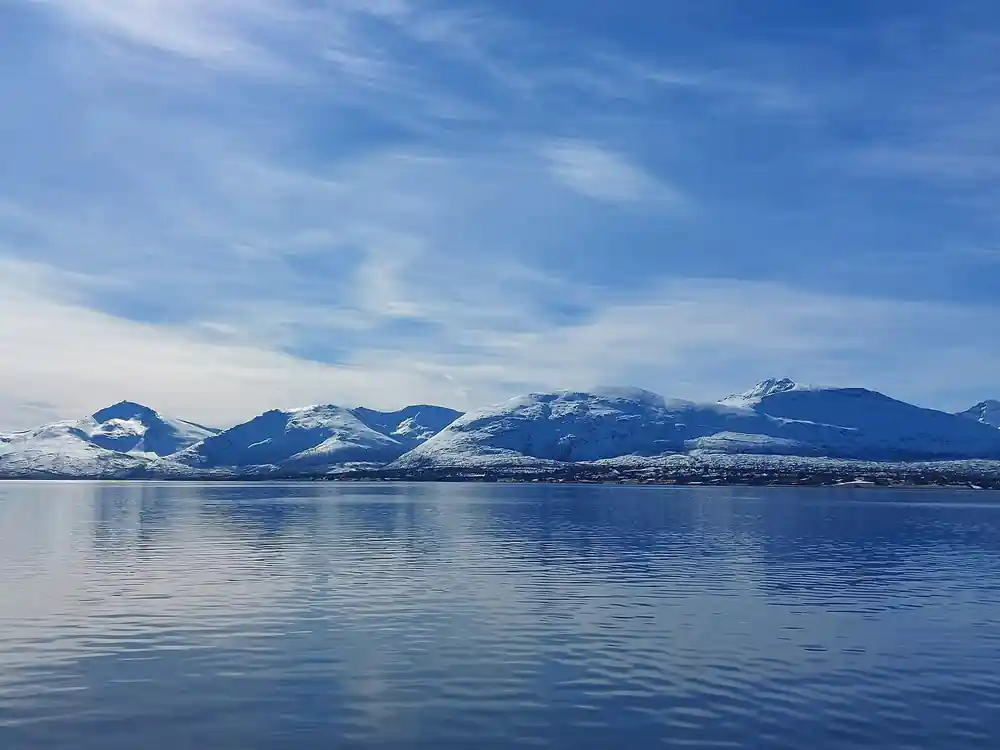
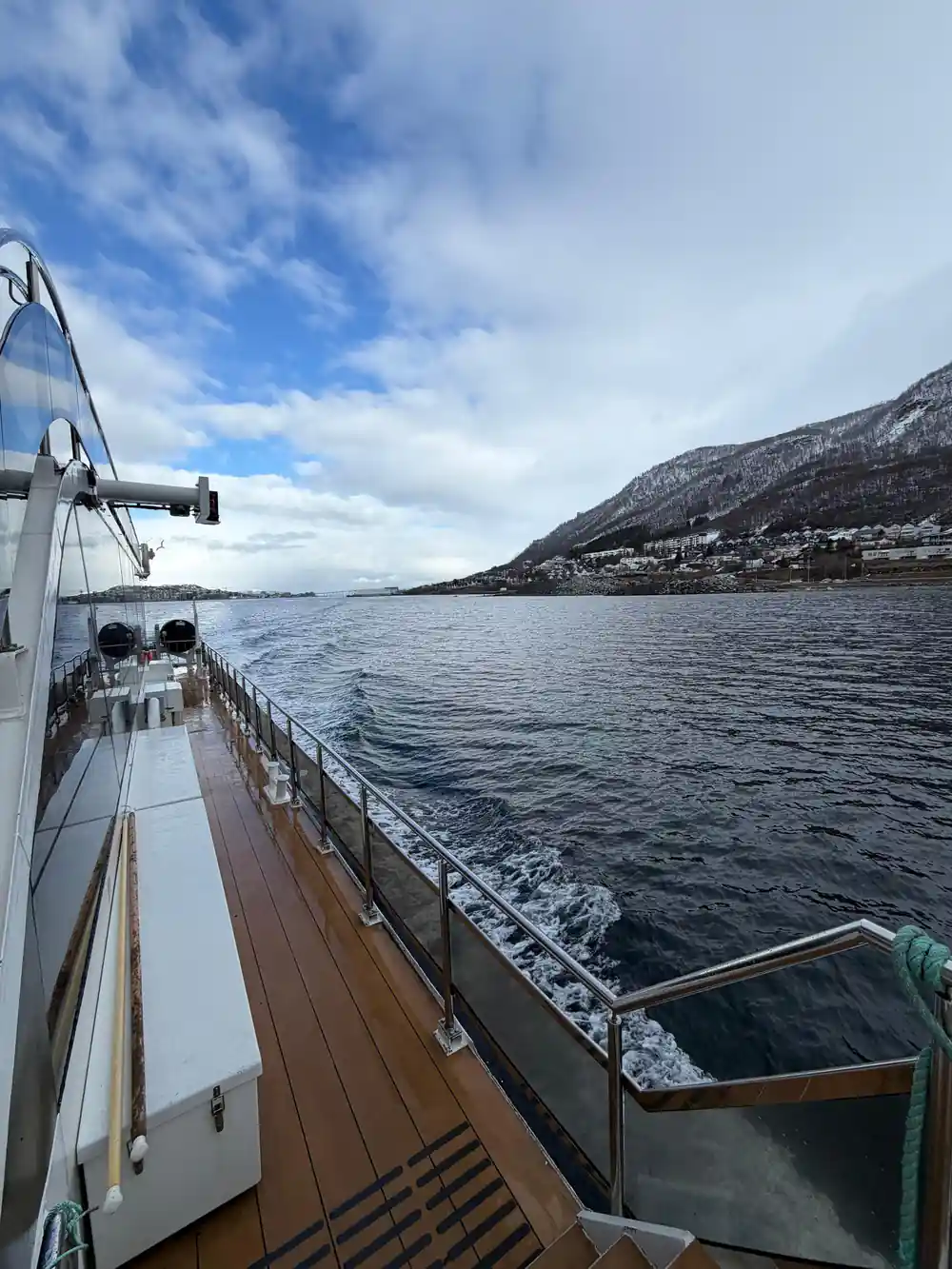
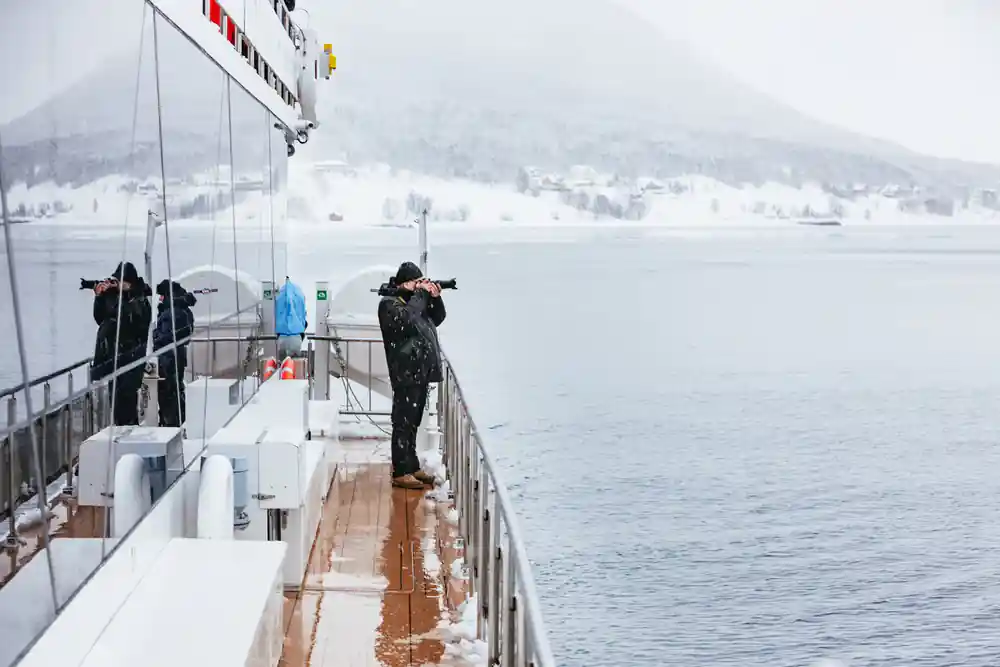
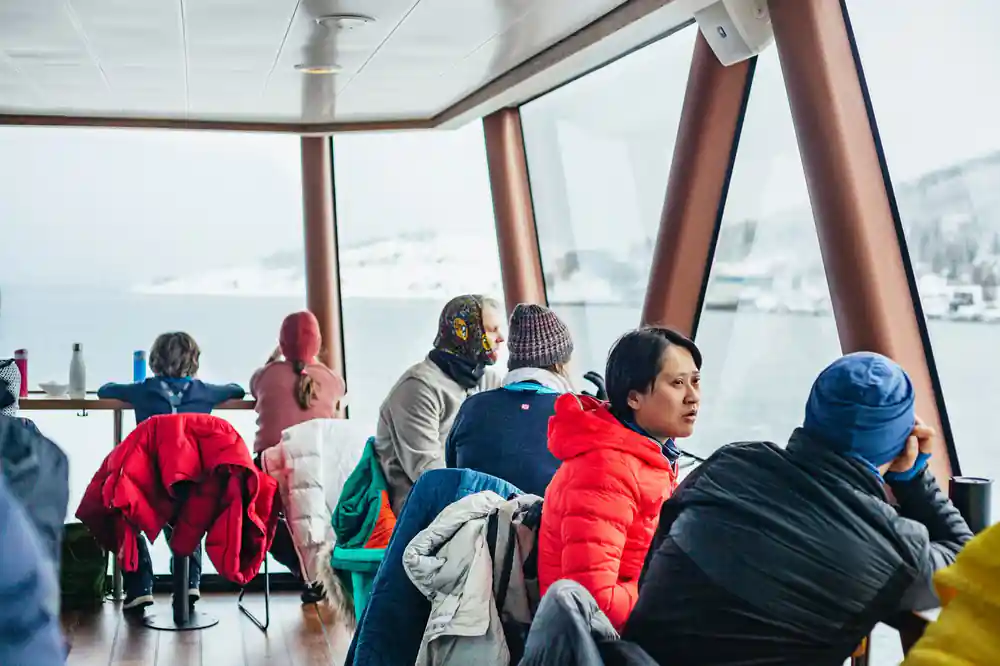
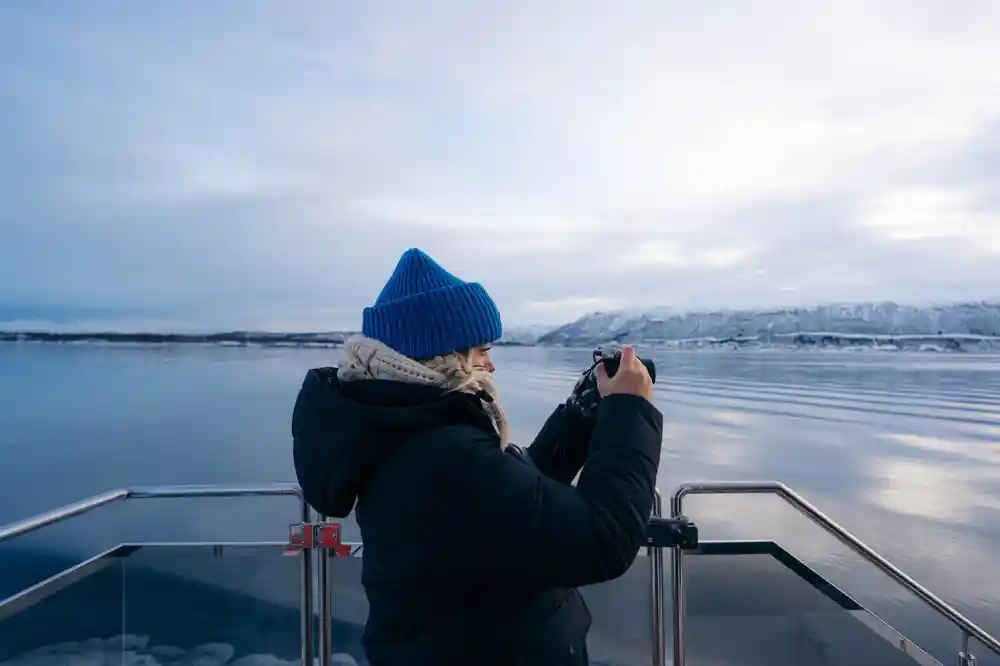
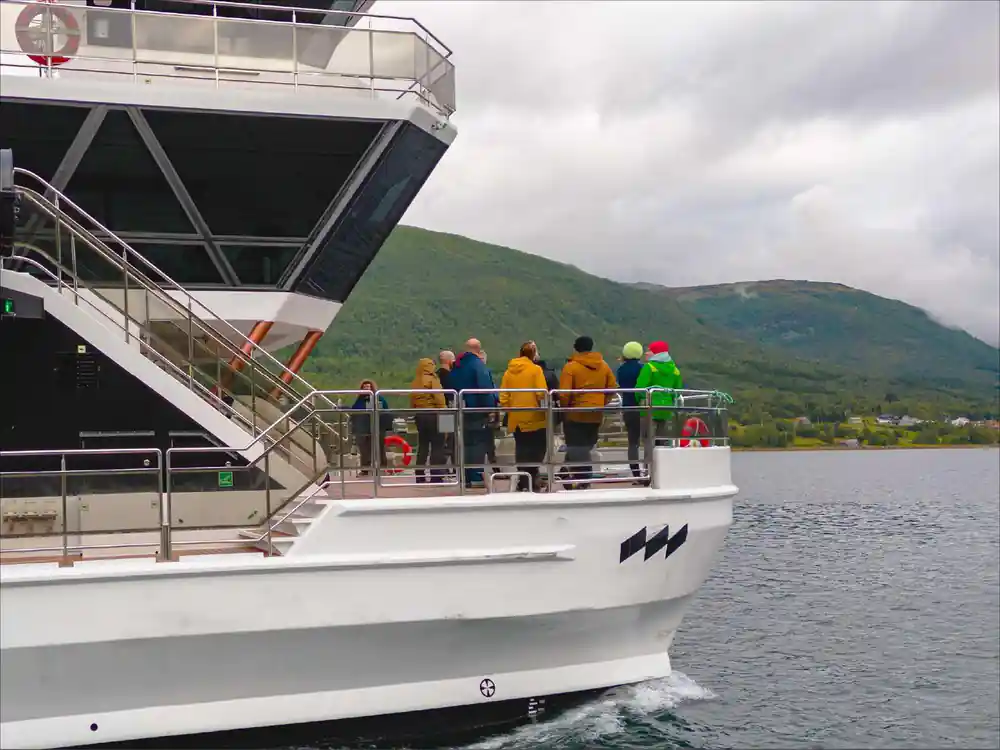
- Wraparound lounges let you watch bays and coastal landscapes unfold without stepping outside into Arctic wind.
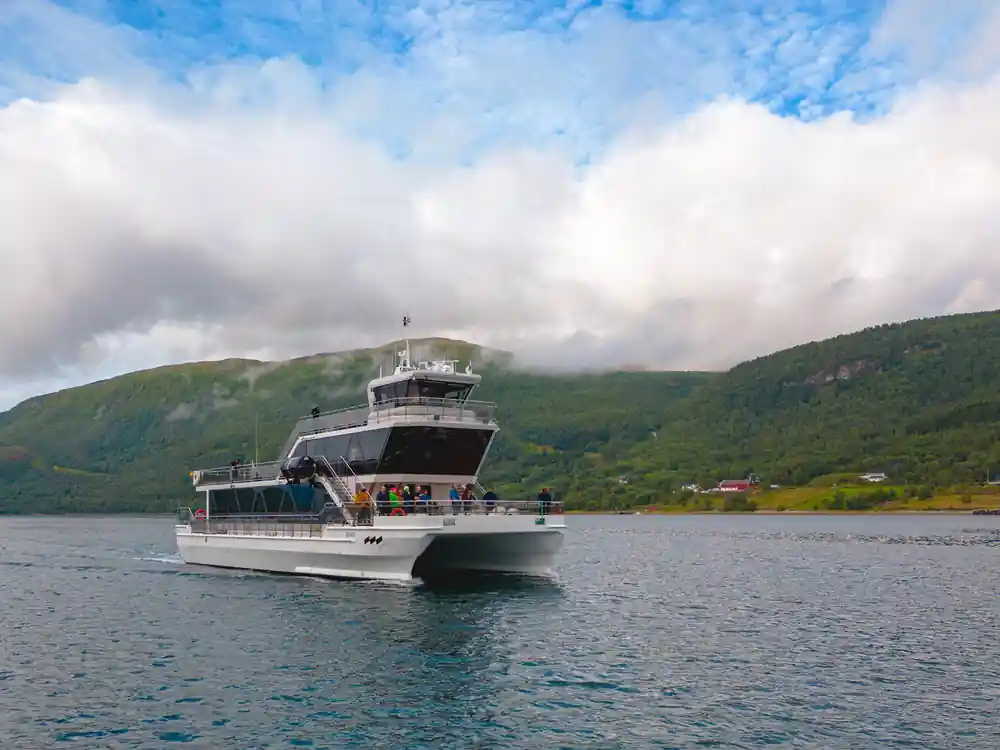
- Twin hulls keep the catamaran steady in Northern seas, so panoramic views stay smooth across your 4-hour voyage.
- Battery systems engineered to perform in freezing temperatures power this Tromsø vessel designed for year-round fjord sailing.
Why Battery Power in Arctic Fjords
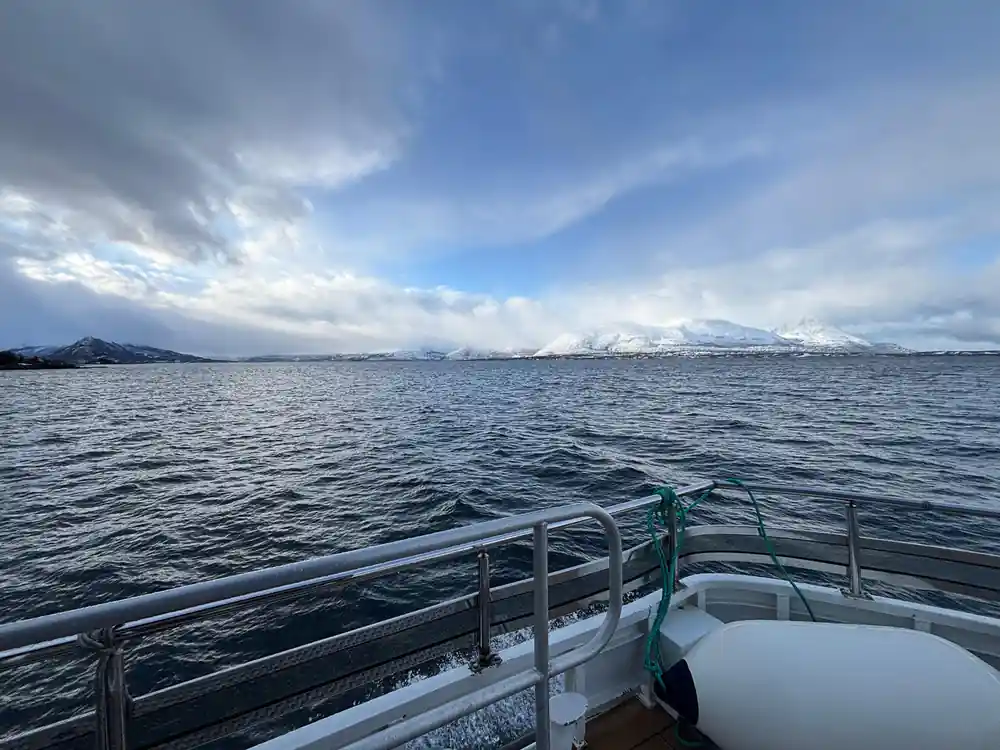
Tromsø's fjords demand a different approach to marine propulsion. The Ramfjorden and surrounding waterways are sensitive ecosystems where traditional diesel engines create noise pollution that disrupts marine mammals and seabirds during critical feeding and breeding periods. Battery-electric propulsion emerged as the solution because it eliminates combustion entirely, producing zero emissions in waters where air quality directly affects wildlife behaviour. The fjord's relatively protected waters and moderate distances between stops make battery range practical, unlike open ocean routes. Arctic operators chose this technology specifically to preserve the acoustic environment that makes these waters unique for wildlife viewing.
The hybrid-electric catamaran was engineered to run on batteries during fjord transits, where speed demands are moderate and encounter distances short. When cruising toward Store Grindoya or through Rystraumen, the vessel draws power from lithium cells rather than fuel tanks. This choice reflects a broader shift in Arctic tourism toward reducing the human footprint in fragile northern ecosystems. The battery system provides consistent power delivery in cold water conditions where engine efficiency typically drops, making electric propulsion not just environmentally sound but operationally reliable in extreme climates.
The Silence That Changes Wildlife Response
Silence transforms the wildlife viewing experience in measurable ways. When diesel engines cut out and battery propulsion takes over, the acoustic underwater environment shifts from 120+ decibels to roughly 80 decibels, a difference that marine mammals detect instantly. Eagles nesting on cliffs above the fjord respond to engine noise by flushing from perches; with electric motors, they remain visible longer. Fish below, particularly in the kelp forest areas explored by the underwater drone, show less avoidance behaviour when approaching the catamaran silently. Marine biologists aboard the 4-hour cruise can hear whale vocalizations through the hull and detect porpoise clicks that diesel noise would mask entirely.
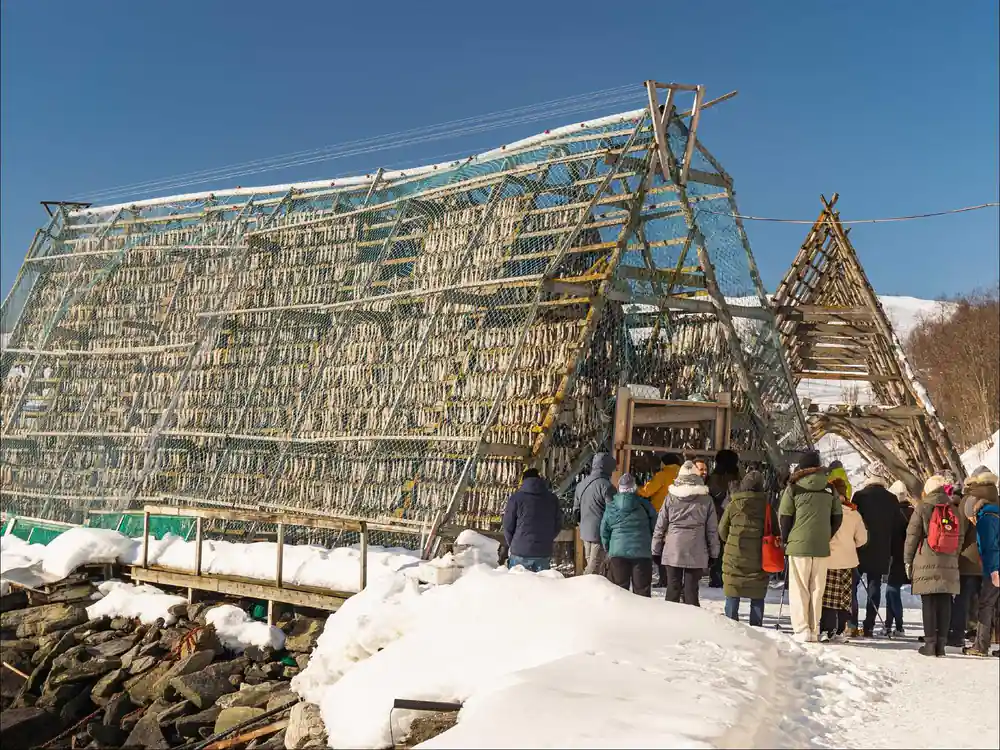
The quieter operation extends viewing windows significantly. Where traditional vessels might approach pods of white-beaked dolphins and cause dispersal within minutes, the silent catamaran allows extended observation as animals display natural behaviour. During the land stop at the fishing station, passengers experience the acoustic difference between engine-off periods and the brief moments when auxiliary systems engage. This contrast makes the engineering achievement tangible. The psychological effect on passengers is equally profound: the absence of vibration and noise creates an immersive experience of the fjord environment rather than a transit through it.












Arctic Batteries and Cold-Water Performance
Lithium battery chemistry faces genuine challenges in Arctic conditions, where water temperatures near Tromsø drop below 4 degrees Celsius year-round. Standard lithium cells lose 20 to 30 percent of their capacity in extreme cold, reducing range and power output when they are most needed. The catamaran's battery system addresses this through thermal management: heating elements maintain optimal operating temperature around the cells, drawing a small percentage of stored energy to preserve the majority. Engineers designed the pack with redundancy, so if one thermal zone fails, others compensate. This approach allows consistent performance across the 4-hour cruise duration regardless of season.
The vessel's battery architecture also incorporates fast-charging capability at Tromsø's dock, essential for multiple daily departures. Charging systems sized for 30 to 40 minute turnarounds mean the catamaran can complete 3 to 4 cruises daily without relying on conventional refueling infrastructure. In Arctic regions where fuel supply chains are irregular, this self-sufficiency became a practical advantage alongside environmental benefits. The cells themselves are monitored continuously through integrated management systems that track voltage, temperature, and state of charge, allowing crew to optimize power delivery across all six stops from Tromsø through Tirpitz-platen.
Design and Construction of the Vessel
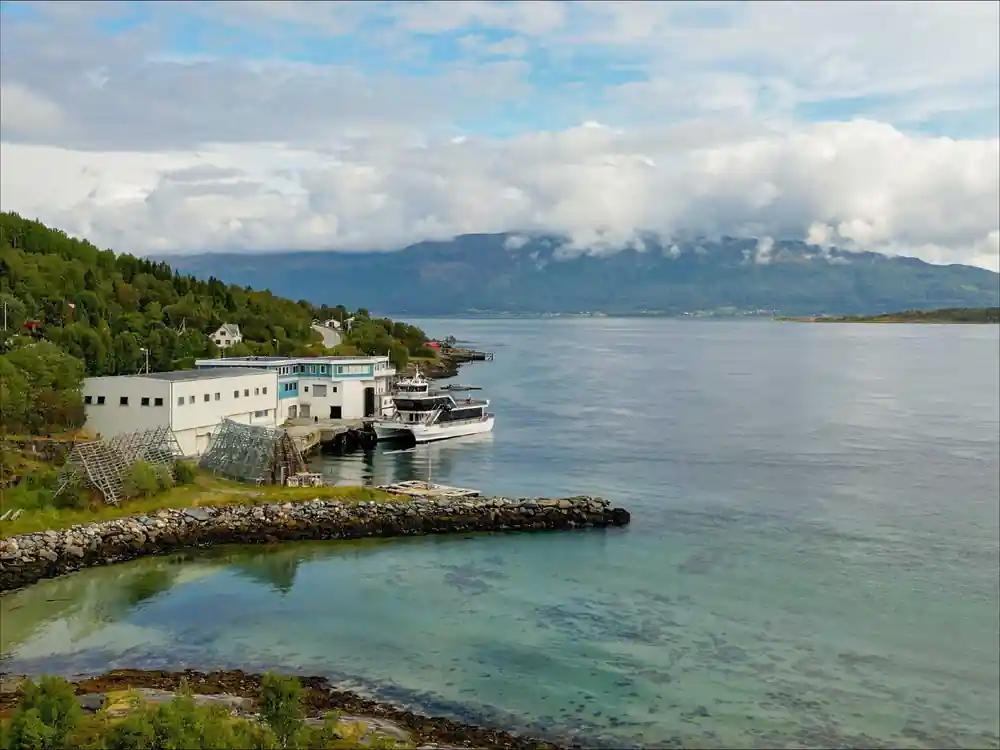
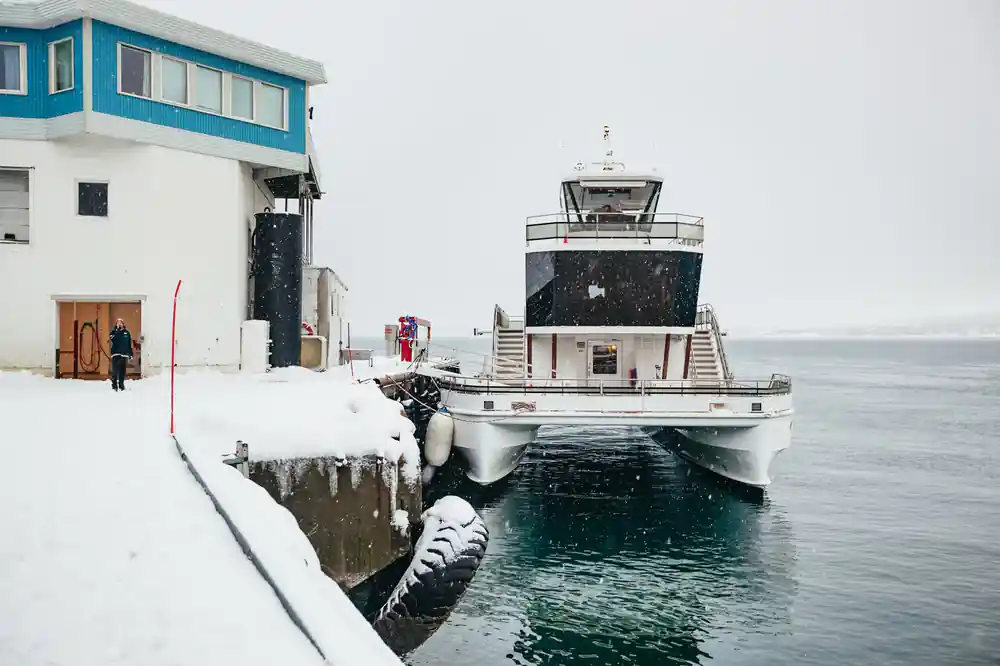
The Tromsø catamaran emerged from collaboration between Norwegian naval architects and Arctic engineering firms specializing in cold-climate vessels. The design process prioritized three objectives: battery efficiency in frigid water, passenger comfort in exposed fjord conditions, and minimal environmental disturbance. Builders selected the catamaran hull form specifically because its twin-hull design provides stability in choppy waters without requiring deep keels, allowing access to shallow anchorages near Store Grindoya and the fishing station. The construction incorporated marine-grade aluminium, chosen for strength-to-weight ratio and performance in sub-zero temperatures where steel becomes brittle.
The build timeline extended over two years, with extensive cold-water testing before entry into commercial service. Norwegian shipyards oversaw construction, drawing on decades of experience with Arctic fishing vessels and expedition ships. The panoramic glass lounge design emerged during this testing phase, as engineers discovered that sightlines mattered as much as silence for wildlife observation. Installation of the underwater drone systems, which explore kelp forests during favourable weather, required custom mounting and power integration. The vessel represents a full-scale prototype of electric fjord tourism in Arctic regions, with specifications now referenced by other operators planning similar conversions across northern Scandinavia.
4 h
This hybrid-electric catamaran delivers 4 hours of silent Arctic cruising on battery power alone.
Catamaran Hull Advantages Over Other Designs
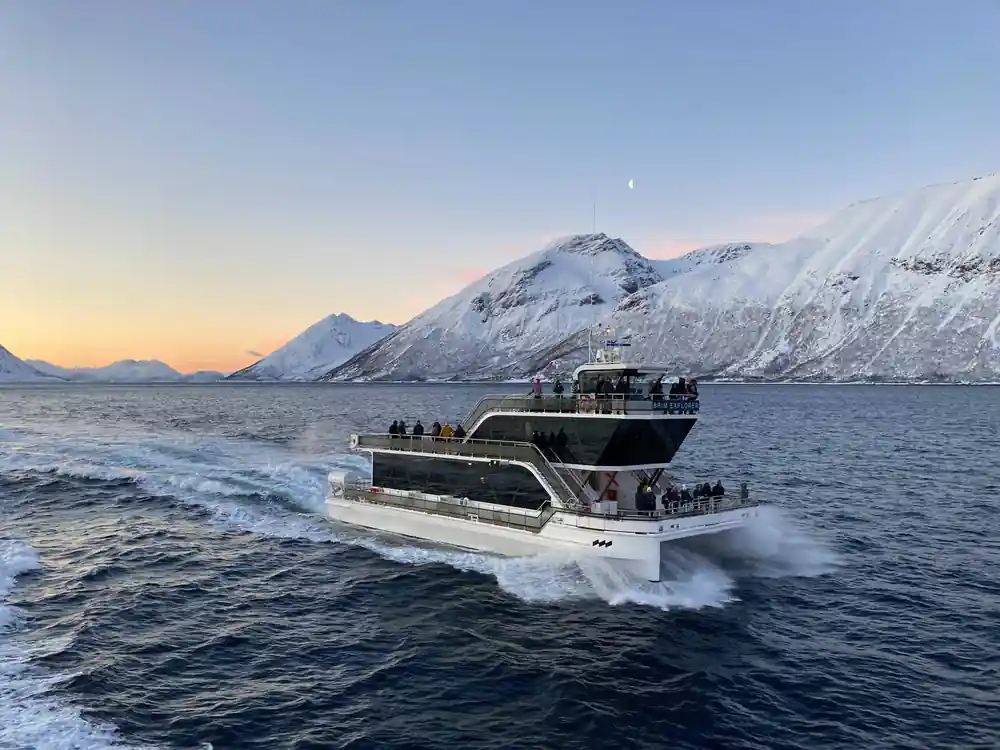
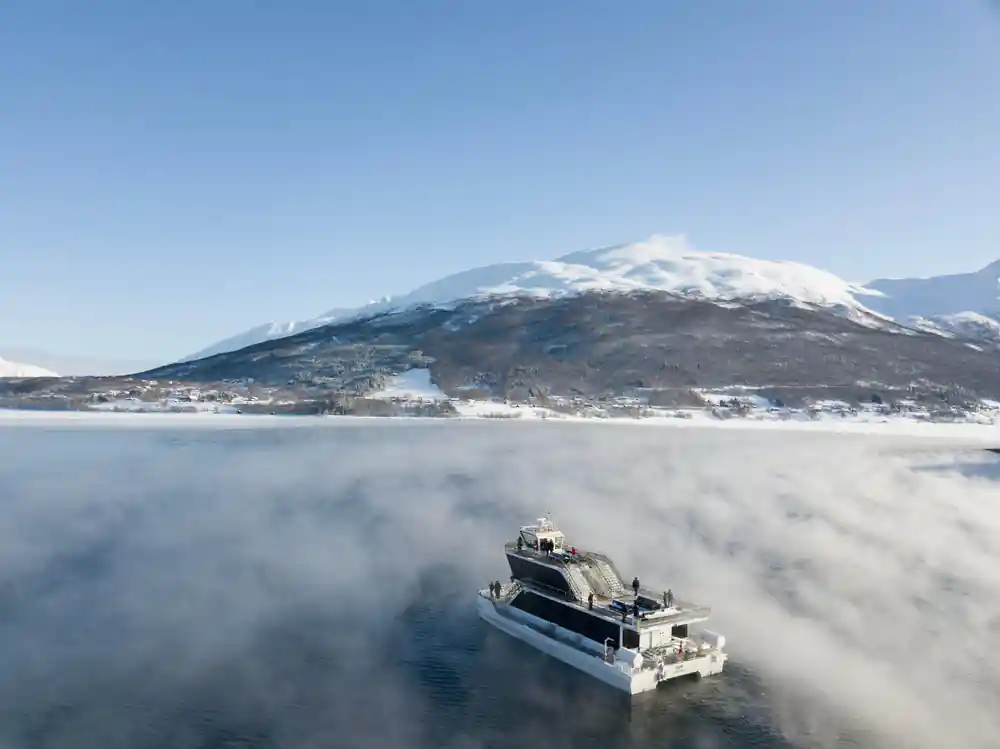
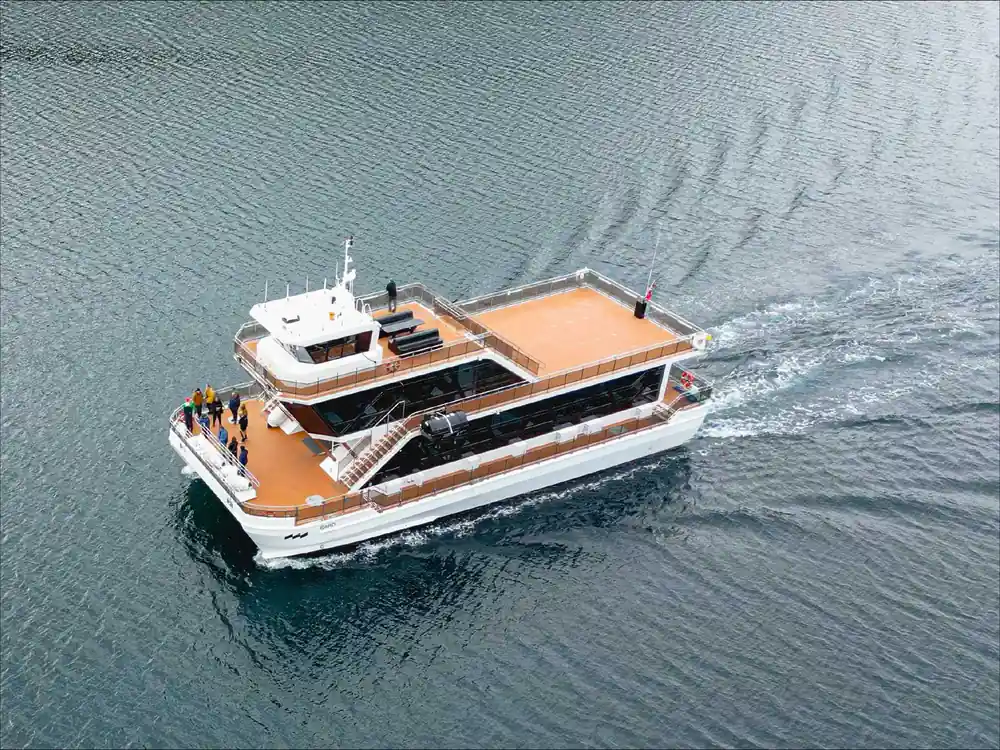
The catamaran's twin hulls create a wide, stable platform that absorbs fjord chop without pitching excessively, crucial when passengers are observing wildlife or using cameras. A comparable RIB (rigid inflatable boat) offers speed and manoeuvrability but sacrifices passenger comfort and creates substantially more noise through the water. Traditional ferries provide greater capacity but require deep-water terminals and cannot access the shallow bays where this tour stops. The catamaran balances these competing demands: it reaches Store Grindoya's shallow approaches, carries enough passengers for economical operation, and maintains the stability necessary for extended observation windows. The twin-hull design also lowers the vessel's metacentric height, reducing the feeling of roll motion that affects some passengers during longer cruises.
Hydrodynamically, the catamaran's two hulls create less wake disturbance than a monohull of equivalent capacity, an advantage when operating near sensitive shorelines and nesting areas. The design allows for efficient battery placement distributed across both hulls, improving weight distribution and range. For the Ramfjorden and surrounding waters, the catamaran's shallow draft of approximately 1 metre permits navigation through channels where single-hulled ferries cannot operate. The wide beam also accommodates the panoramic glass lounge without compromising stability, allowing passengers to observe the fjord's 7 designated stops without leaving sheltered seating.
Emissions Reduction in a Sensitive Fjord System
Switching from diesel propulsion to battery-electric operation eliminates several categories of fjord pollution. A single 4-hour diesel cruise produces approximately 80 to 120 kilograms of CO2 directly, plus additional emissions from fuel extraction and transport. The catamaran's batteries, charged from Norway's renewable hydroelectric grid, effectively achieve zero operational emissions. Over a 20-year operational lifespan, a single vessel prevents roughly 600 to 800 tonnes of CO2 from entering the atmosphere. The absence of diesel particulates matters equally: these microscopic particles accumulate in fjord sediments and are ingested by filter-feeding organisms like the kelp forest fauna the underwater drone observes.
Nitrogen oxide emissions, which contribute to eutrophication in fjord waters, vanish entirely with electric propulsion. Traditional engines release roughly 15 to 25 grams of NOx per kilowatt-hour of power; battery systems release none. This matters visibly in Tromsø's fjords, where algal blooms have increased in recent decades partly due to nutrient loading from maritime traffic. By replacing diesel with batteries, this operator removes a cumulative stressor on water quality. The conversion also eliminates oil and fuel leakage risks, protecting the marine ecosystem that makes wildlife viewing possible. For a region where tourism depends on pristine conditions, electric propulsion becomes both an environmental commitment and a business safeguard.
Experiencing the Technology Firsthand
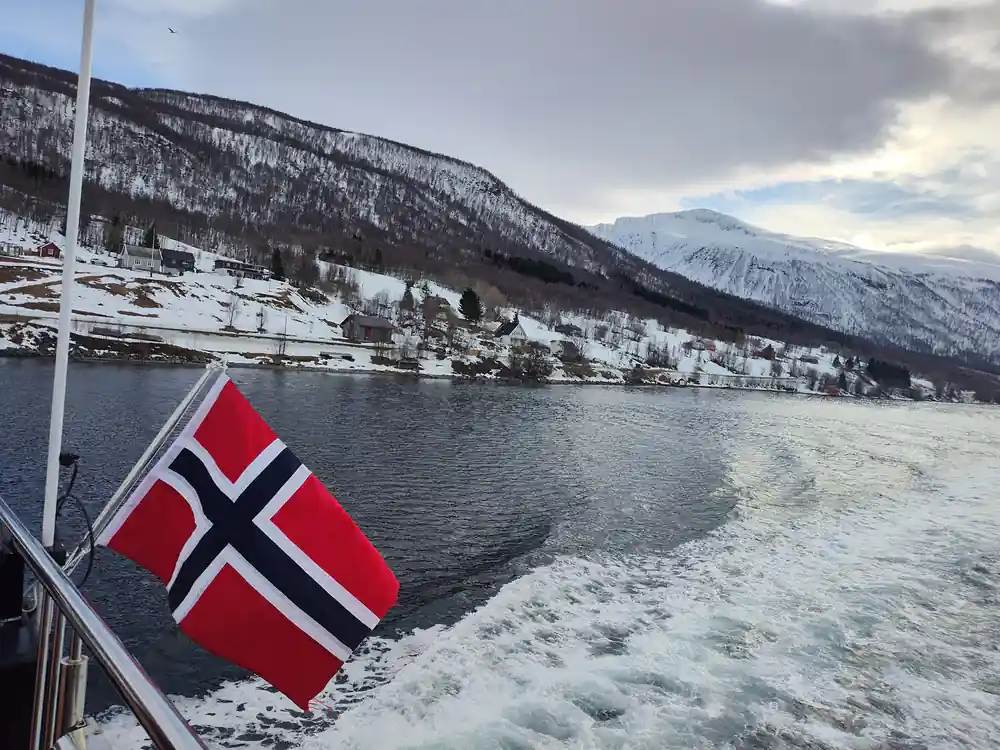
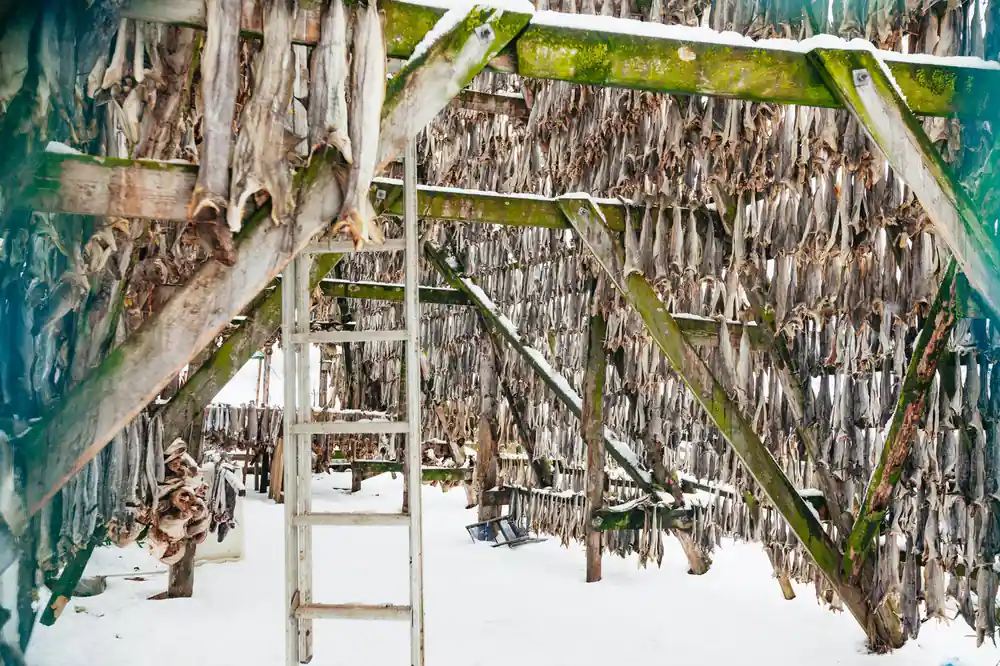
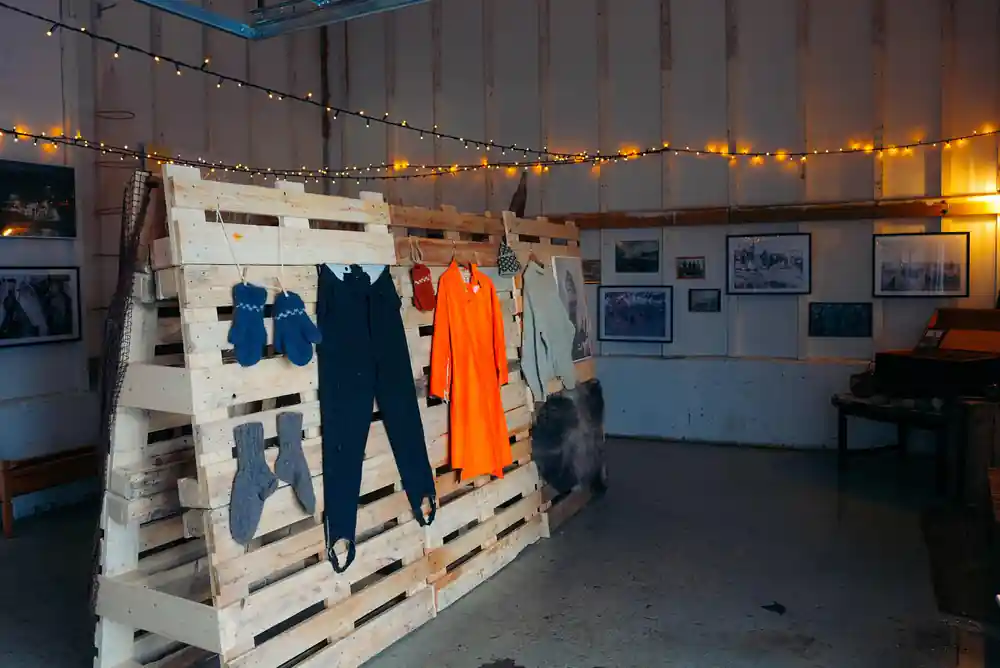
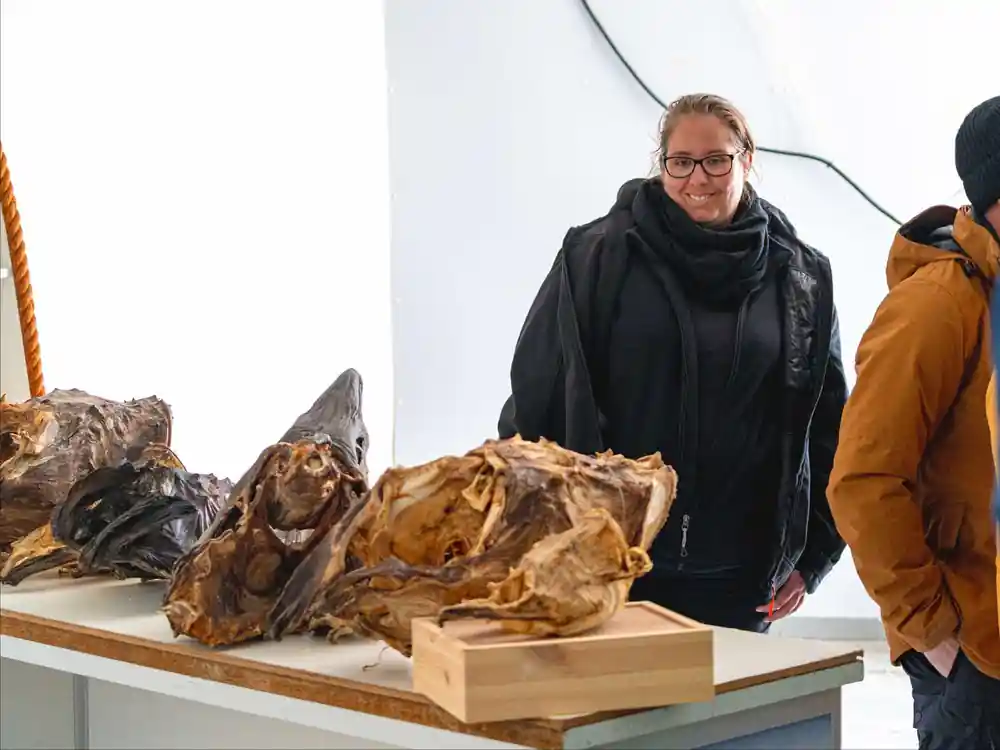
Passengers aboard the catamaran encounter the engineering achievement through direct sensory contrasts. During the journey through Rystraumen, the silence becomes audible as passengers notice the absence of vibration through deck and seat. The ship's intercom systems sound clearer because background engine noise no longer masks speech. Wildlife responses become visible: eagles remain on cliff-side perches longer during silent approaches, and the underwater drone footage of kelp forests shows fish behaving naturally rather than fleeing from approaching noise. The 4-hour duration allows passengers to experience the full cruise cycle, including the land stop at the fishing station where the silence emphasises the natural soundscape of coastal Tromsø.
The panoramic glass lounges frame this experience deliberately. Rather than viewing the fjord through small windows while enduring engine drone, passengers sit surrounded by seamless views of Tromsø's 7 designated stops, from the initial departure point through Store Grindoya and Tirpitz-platen, without engine vibration interfering with observation. On favourable weather days, the underwater drone deployment becomes a tangible demonstration of battery-powered exploration: the drone descends silently into kelp forests, transmitting images to lounge screens while the catamaran holds station quietly overhead. This integrated experience of silent propulsion, stable platform, and advanced technology reveals how engineering choices directly enhance the natural wonder these waters offer.
Hear the Arctic silence for yourself
from US$157Reserve now & pay later